
Oval Cut Diamond: Bow-Tie, Ratio and Settings
An oval cut diamond reads larger than its weight. How to judge the bow-tie, pick a ratio, and set one, from CIZELE's live inventory.
An oval cut diamond reads larger than its weight because the same carat is spread across a longer outline than a round, giving a noticeably greater face-up area. For anyone weighing visible size against budget, an oval cut diamond gives the most visible stone for the money of any brilliant-faceted shape.
What is the bow-tie on an oval cut diamond
The bow-tie is a shadow across the centre of an oval cut diamond, where the pavilion returns less light than the rest of the stone. Every oval has one; in a well-proportioned stone it is faint and shifts as the hand moves, and in a poorly cut one it sits there permanently as a dark band that no setting can hide. The bow-tie does not appear on a certificate, so seeing the actual stone, not just its grading report, is the only way to judge it before buying.
What ratio should an oval cut diamond be
Length-to-width on an oval cut diamond is a matter of taste rather than correctness. Around 1.35 to 1.45 is where most buyers settle, elongated enough to read clearly as an oval without looking stretched. Below about 1.30 it starts to resemble a round; above 1.50 it becomes deliberately dramatic, which is worth choosing on purpose rather than by accident, since a very elongated oval also tends to show a more pronounced bow-tie. The carat and size guide covers how that ratio interacts with apparent size across every shape CIZELE sets.
What is the right setting for an oval cut diamond
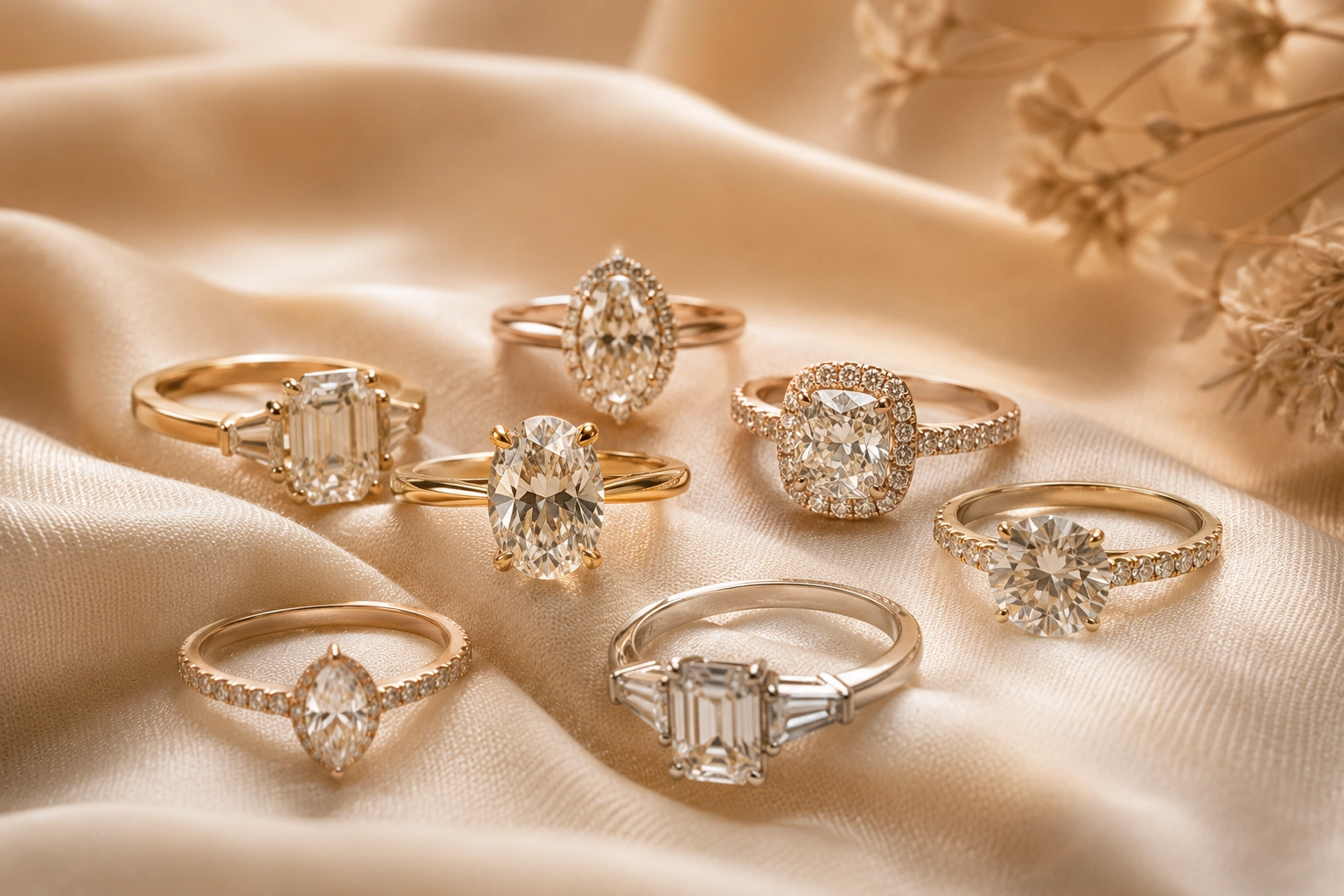
With no corners to protect, an oval cut diamond is among the more durable elongated shapes to set, which gives more setting freedom than a pointed cut like a marquise. There is no fragile point to shield with a V-prong, so the metalwork can focus entirely on how the ring looks rather than on protecting the stone. CIZELE sets oval stones as a plain solitaire that lets the outline speak for itself, in a halo that adds a ring of smaller stones without making the piece heavy, and east-west, turned sideways across the finger for something quieter and less expected than the lengthwise orientation. A guide to the finished oval engagement ring covers those settings alongside metal and proportion choices for the whole piece, not just the stone.
How does an oval cut diamond compare to a round for colour and clarity
An oval cut diamond is brilliant-faceted along its full length, which forgives body colour and clarity about as readily as a round of the same grade, unlike a step-cut shape such as an emerald, which shows both far more openly. The certificate, GIA or IGI, remains worth reading in full regardless, since the bow-tie and the facet pattern both interact with how clean or how coloured a given stone looks in practice.
How an oval differs from a cushion
An oval cut diamond is sometimes confused with a cushion because both are soft-cornered alternatives to a round, but an oval is elongated and brilliant along its whole length, where a cushion stays close to square with larger, fewer facets and slower flashes of light. A buyer choosing between the two is really choosing between a consistently sparkling, elongated stone and a more compact one with broader, more deliberate flashes.
Should an oval cut diamond be lab-grown or natural
Either, and the shape makes the choice easier rather than harder. An oval’s size advantage means the question is usually “how large a stone for this budget”, and that is exactly where a lab-grown stone of the same grade changes the answer most. CIZELE’s live diamond inventory carries both, each with its own GIA or IGI report, and the guide to lab-grown against natural sets out what separates them beyond price. What matters more for an oval specifically is that the bow-tie is a cutting outcome, not an origin one: a badly proportioned lab-grown oval and a badly proportioned natural one show the same shadow, so neither origin is a shortcut past looking at the individual stone.
How does an oval cut diamond wear on different hand shapes
An oval cut diamond’s elongating effect is strongest on shorter or wider fingers, where the long axis visually lengthens the finger more noticeably than it does on an already long, narrow hand. That is not a rule against wearing an oval on any particular hand, simply a reason some buyers choose a more elongated ratio, closer to 1.5, specifically for that lengthening effect, while others closer to 1.35 want the oval’s size advantage without drawing as much attention to the finger’s proportions.
Starting an oval cut diamond ring
CIZELE’s shape archive for oval lists live oval cut stones in inventory by carat, colour and clarity, lab-grown and natural, each independently certified. Design a ring around an oval cut diamond once a specific stone stands out, or message CIZELE on WhatsApp with a question about a particular stone. A video consultation is a good next step for a second opinion with no obligation.
