
Cushion Cut Diamond: The Full Buying Guide to the Shape
A cushion cut diamond softens every line with broad, slow flashes of light. History, clarity, colour, setting and CIZELE's live stones, explained.
A cushion cut diamond is square or gently rectangular with rounded corners, descended from the old mine cuts worked by candlelight in the eighteenth and nineteenth centuries. Its facets are larger and fewer than a modern round, so it throws broad, slow flashes of light rather than fine white sparkle, and it holds body colour more openly than almost any other shape CIZELE sets.
What makes a cushion cut diamond look the way it does
The rounded corners and open facet pattern are what separate a cushion cut diamond from every square shape around it. CIZELE’s short note on the shape covers its lineage from the old mine cut; this guide covers choosing and setting one. Two distinct families exist within the same name, and they read differently enough that it is worth knowing which one you are looking at before comparing stones: a chunky cut, with large open facets and distinct, slow flashes, and a crushed-ice cut, where smaller facets scatter light into something closer to shattered glass. Neither is the better cushion; they simply photograph and wear differently, and a stone bought from a photo alone can surprise a buyer who had the other family in mind.
Why colour matters more on a cushion than on a round
Because its facets are large and open, a cushion cut diamond shows body colour more readily than a round of the same colour grade. A faint warmth that would stay invisible in a brilliant-faceted round can show here as a genuine tint, and some buyers want exactly that, particularly set against yellow gold, where a warmer stone sits naturally rather than fighting the metal. Buyers who want the coolest possible white should look one grade higher than they would for a round; buyers who like warmth in a vintage-leaning piece can comfortably buy lower and spend the saving on clarity instead, since the open table shows clarity about as readily as it shows colour.
Cut, carat and how big it looks
Cut still decides how much of a cushion’s light comes back to the eye, but the grading language differs from a round’s: because the shape is not a single fixed proportion the way a round brilliant is, “cut grade” on a cushion’s certificate is judging the specific stone’s proportions and symmetry rather than a universal ideal. A cushion cut diamond sits between an elongated shape and a very deep round on apparent size for a given carat weight: more compact than an oval or marquise, more spread than a deep round of the same weight. The carat and size guide covers that trade-off across every shape CIZELE sets, and it is worth reading before comparing two cushion stones on carat weight alone.
How a cushion differs from a princess
A cushion cut diamond is often set beside the collection’s other square shape, which keeps its corners sharp and uncropped for a harder, more contemporary brilliance. A cushion rounds those same corners away and trades that sparkle for slower, broader flashes and a softer, older-feeling outline, closer to the old mine cuts it descends from than to anything cut in the last fifty years. The rounded corners also make a cushion noticeably more forgiving to set and to wear day to day, since there is no sharp point waiting to catch on fabric or a doorframe the way a sharp-cornered square shape can, which matters for anyone choosing a daily-wear ring over an occasional one.
How a cushion differs from an oval
A cushion cut diamond is sometimes confused with an oval because both are soft-cornered alternatives to a round, but the outlines are genuinely different. An oval is elongated and brilliant-faceted along its full length, which tends to make it look larger per carat than a cushion of the same weight; a cushion stays close to square or gently rectangular, with its light return concentrated in broad flashes rather than spread continuously along a longer outline. A buyer choosing between the two is really choosing between an elongated, consistently brilliant stone and a more compact one with slower, more deliberate flashes of light.
Setting a cushion cut diamond
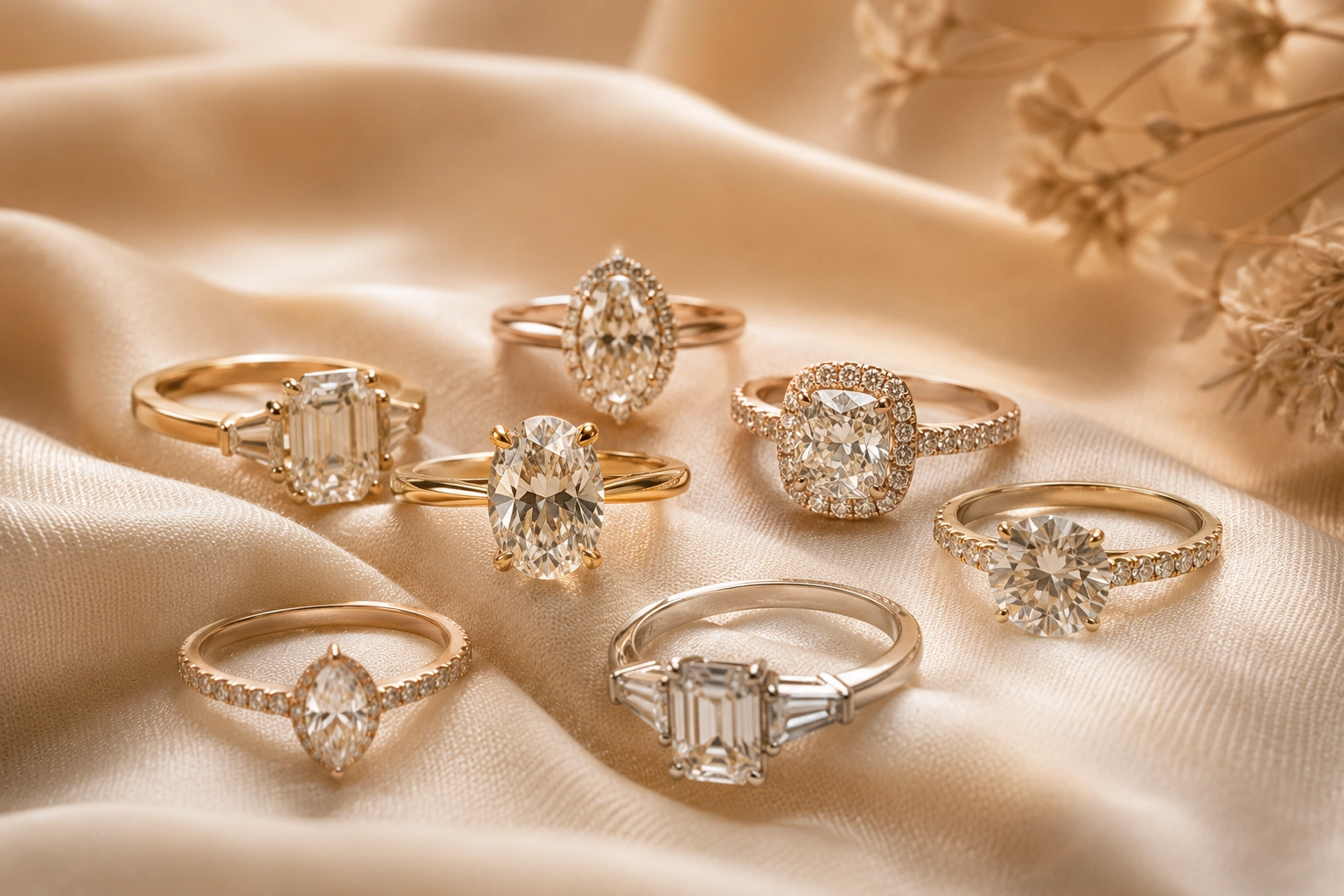
A cushion carries a halo unusually well: the rounded outline of the centre stone is echoed rather than fought by a ring of smaller stones, which is part of why the shape reads as inherited rather than newly bought. In a plain solitaire it still looks deliberate, simply quieter than it does under a halo. Because the corners are already rounded, a cushion needs less metal to protect them than a sharp-cornered shape, which leaves more of the stone visible once it is set. The certificate, GIA or IGI, remains the only reliable way to compare two cushion stones before seeing them side by side, since a photograph cannot show which facet family a particular stone belongs to.
Starting a cushion cut diamond ring
CIZELE’s shape archive for cushion lists the live cushion stones in inventory by carat, colour and clarity, lab-grown and natural, each independently certified. Design a ring around a cushion cut diamond once a specific stone stands out, choosing the setting and metal to suit that stone’s facet family and colour. A video consultation is a good next step for a second opinion with no obligation, and for a quick question about a specific stone, message CIZELE on WhatsApp.
