Oval Engagement Ring: Shape, Setting and Sizing
An oval engagement ring guide: why the shape looks larger per carat, which settings suit it, and how CIZELE builds one in solid gold, certified.
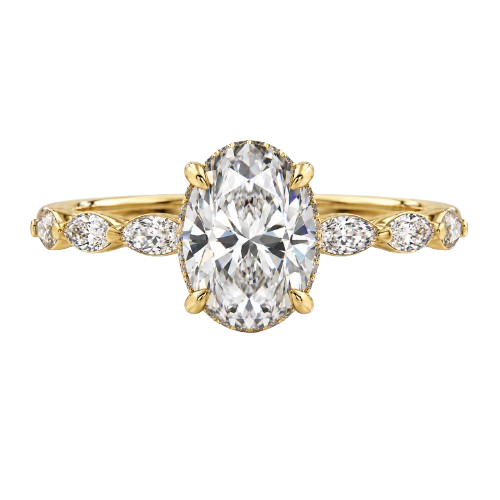
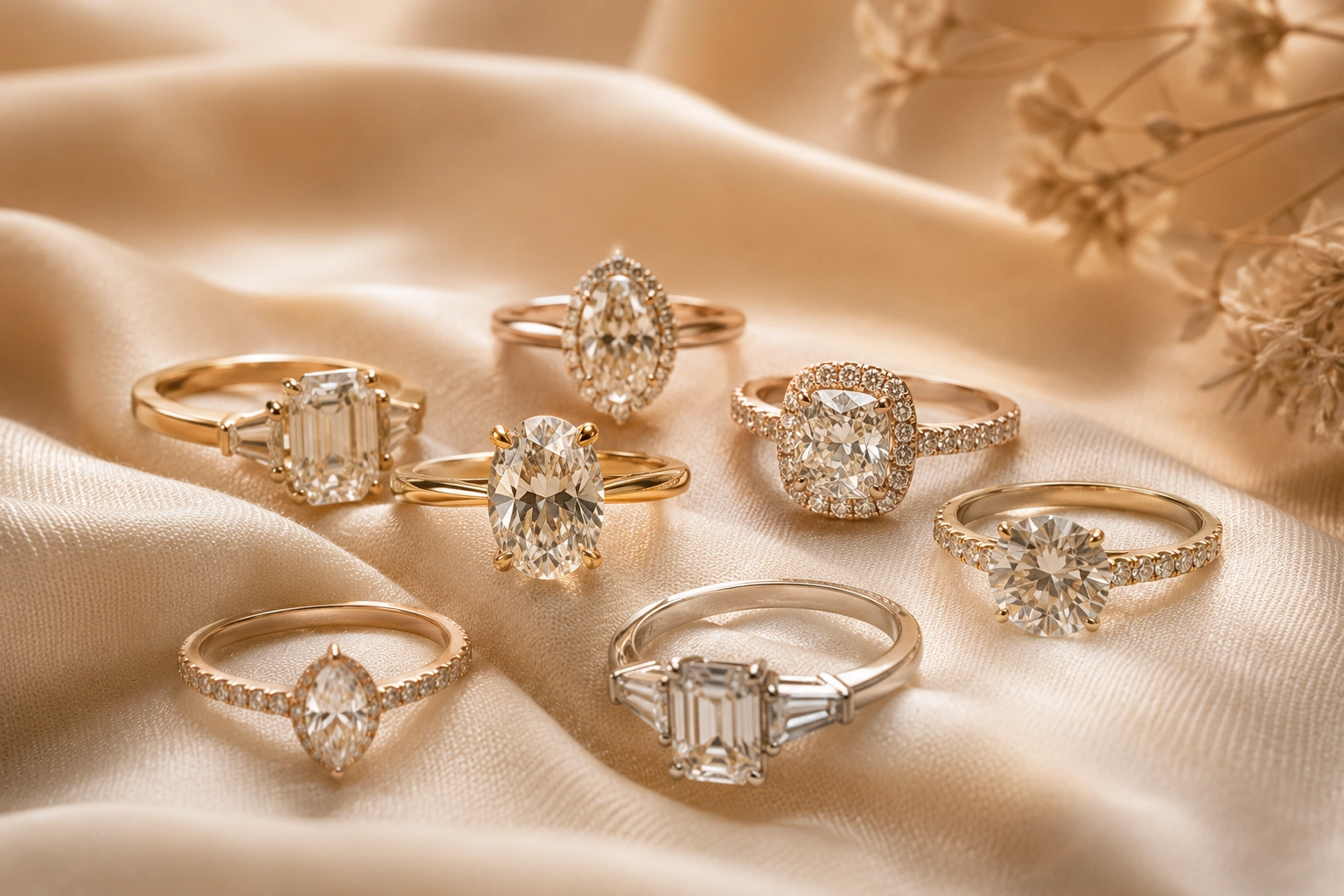
An oval engagement ring sets an elongated, rounded diamond that looks larger than a round stone of the same carat weight, because its length spreads the same area over more of the finger. CIZELE cuts oval as one of ten diamond shapes, set into any of its ring designs and finished by hand in solid gold.
What is an oval engagement ring?
An oval engagement ring uses an oval brilliant cut, essentially a round diamond’s facet pattern stretched into an elongated shape, which is why it keeps most of a round’s brilliance while reading noticeably larger for the same weight. It is one of CIZELE’s ten cuts, browsable on /engagement-rings/ alongside every setting it can be paired with. The elongated shape also tends to flatter the finger by making it look longer, which is part of why oval has become one of the more requested alternatives to round.
The trade-off against round is brilliance at the very centre of the stone: an oval’s elongated facet pattern does not return light quite as evenly as a round brilliant’s symmetrical one, which is part of why cut quality matters even more for oval than for round when comparing two stones of similar carat and clarity.
Which settings suit an oval diamond
An oval stone works with most of CIZELE’s settings, but a few pair with it particularly well. A classic solitaire lets the oval’s length speak for itself with nothing else competing for attention. East-west turns the oval sideways across the finger rather than along it, a less traditional line that only really works with an elongated shape like oval, pear or marquise. A toi et moi setting can pair two ovals of matching size side by side, which is one of the more common two-stone pairings CIZELE builds.
The bow-tie effect, and how to avoid it
Oval diamonds can show a “bow-tie”, a darker shadow across the centre of the stone caused by light blocking itself as it passes through, visible in some cuts more than others depending on the stone’s proportions. Not every oval shows a strong bow-tie, and it is a normal feature of the cut rather than a flaw, but it is worth seeing a specific stone on video before committing to it rather than judging from a photo alone. This is one of the details a video consultation is built to check before a diamond is set, alongside the stone’s proportions and how evenly it sits when turned under light.
Metal and finish
Oval stones are set in yellow gold, white gold or rose gold, all solid recycled gold rather than plated. White gold tends to be requested more often with oval stones because a lighter metal keeps the eye on the stone’s length rather than adding warmth around it, though this is a preference rather than a rule; a warmer gold works just as well depending on the setting and the prongs chosen to hold the stone’s rounded sides and pointed ends securely. Every stone set is certified GIA or IGI, covered in CIZELE’s guide to understanding your certificate.
Lab-grown or natural, at the size an oval allows
Because an oval reads larger per carat, it is a shape where the natural-versus-lab-grown decision can matter more to a budget than with a smaller-looking cut, since going a size up costs less in a lab-grown stone. CIZELE sets both from certified inventory on /diamonds/, and the difference between them is set out fully in the guide to lab-grown vs. natural diamonds. Neither changes how the oval shape itself performs; the choice is origin and price, not appearance.
Getting the ring size right for an elongated stone
An oval stone that sits noticeably off-centre or crooked on the finger is more visible than the same fault would be on a round stone, because the eye follows the length of the oval and notices any twist immediately. Getting the ring size close before ordering reduces the resizing needed afterwards, and CIZELE’s guide on finding her ring size without ruining the surprise covers how to do this without asking directly. Free resizing is available on every ring regardless.
Designing an oval engagement ring with CIZELE
Choosing between oval and round usually comes down to two questions: how much visual size matters against carat, and how much brilliance across the whole stone matters against a longer, more elongated look. Round keeps an even light return across a symmetrical outline; oval trades a little of that even sparkle for length and a distinctive shape that reads differently on every hand depending on finger length. Neither is a better shape in general, only a better fit for what the wearer wants to see when they look down at their own hand.
An oval engagement ring can be built shape by shape on /create/: choose the setting and metal, then the oval diamond is matched afterwards from certified inventory, checked for bow-tie and proportion before it is set. To see a specific stone on video or talk through setting choices, message CIZELE on WhatsApp at +20 150 160 5724, or book a private video consultation before anything is made.