
Solitaire Engagement Ring: The Complete Buying Guide
A solitaire engagement ring puts the full attention on one diamond. This guide covers carat, cut, setting and band width so you choose with confidence.
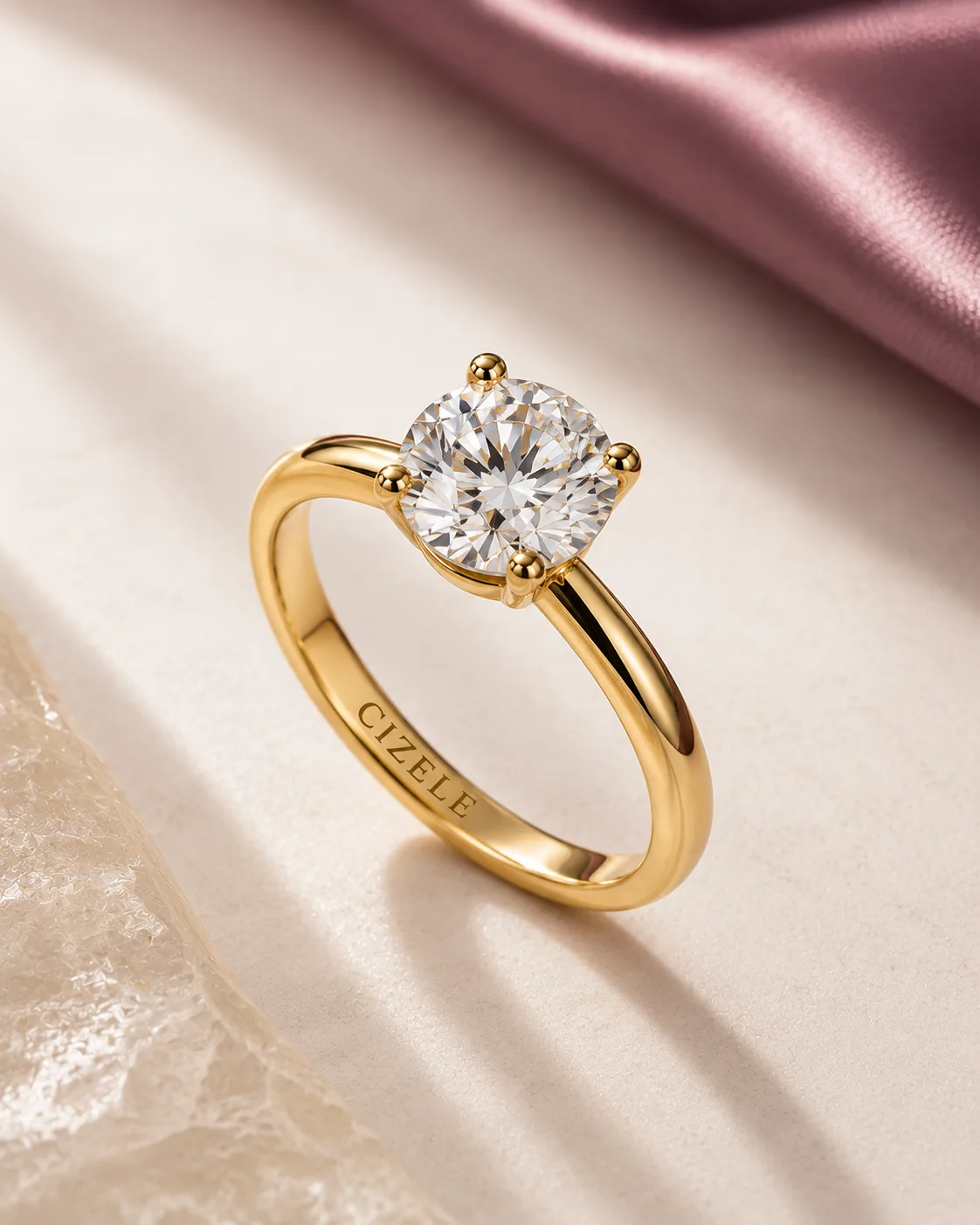
A solitaire engagement ring holds a single diamond on a plain band, with nothing else competing for the eye. That simplicity is the whole appeal: the stone’s cut, colour and the way light moves through it carry the entire ring, so getting those choices right matters more here than in any other style. This guide walks through the stone, the setting and the band so you can choose one with confidence.
Why choose a solitaire engagement ring over a halo or a trilogy?
A solitaire engagement ring suits anyone who wants the diamond itself to be the story, not a supporting cast of smaller stones. A halo adds a ring of diamonds around the centre stone to make it look larger and catch more light from the sides; a trilogy sets three stones in a row for a different symbolism entirely. A solitaire gives up that extra sparkle and that extra meaning in exchange for clarity of line, and it is the style that photographs best from a distance and wears quietest day to day. It also tends to be the easiest style to resize later, since there are no small stones near the shank to work around. If you are drawn to a cleaner silhouette generally, the plain band carries the same idea through to the wedding ring that sits beside it.
How big should the diamond look, and does carat alone decide that?
Carat is weight, not size, and two stones of the same carat can look different widths depending on their shape and cut. An oval or marquise stone of a given carat reads larger across the top than a round of the same weight, because the weight is spread over a longer outline rather than concentrated in a circle. Cushion and emerald cuts sit in between. If apparent size matters more to you than the carat number on the certificate, an elongated shape is the more direct route than paying for extra weight a round cut will not show. Our carat size guide walks through how that trade-off plays out across shapes in more detail.
Does the setting change how big the stone looks?
Yes, a setting with a narrower band or a slightly raised profile makes the same stone look larger, because there is less metal around it competing for attention. A bezel setting wraps a rim of metal around the stone’s edge, which protects it well but visually shrinks it slightly against a thin prong setting that shows more of the diamond’s outline. Four prongs show more stone than six; a basket that sits a touch higher lets more light reach the pavilion of the diamond from underneath, which is part of what makes a solitaire look brighter than its carat weight alone would suggest.
Which diamond shapes actually suit a solitaire best?
Round, oval and cushion are the three shapes that carry a solitaire setting most comfortably, because their outlines stay even and don’t rely on neighbouring stones to balance them visually. Round returns the most light of any shape and is the safest choice if brightness matters most to you. Oval and cushion both read a little larger for their carat and suit a more elongated finger shape. A princess or radiant cut solitaire has a crisper, more architectural look if you want something less rounded. Whichever shape you’re drawn to, our piece on why a solitaire leaves nothing to distract from the stone is worth reading alongside this one for the feel of it rather than the mechanics.
How wide should the band be?
A narrower band, typically around 1.5 to 2mm, keeps the attention on the stone and is the traditional choice for a solitaire; a wider band of 2.5mm or more reads sturdier and slightly more modern but can make a smaller stone look proportionally less prominent. There’s no fixed rule, and it comes down to how the ring sits against your hand and how it will pair later with a wedding band. If you already know you’ll want an accent band or a pavé band sitting flush against the solitaire later, it’s worth choosing the engagement ring’s width with that pairing in mind from the start.
How do I actually choose, start to finish?
Start with the diamond: shape, then cut grade, then carat, checked against a GIA or IGI certificate so the figures are independent of the retailer. Then choose the setting height and band width that suit how the ring will be worn day to day. A CIZELE solitaire is made to order and finished by hand, and the usual timeline from first consultation to a finished ring is about 2 to 6 weeks depending on the design. You can start by sketching what you have in mind in the ring builder, or by describing it on WhatsApp and booking a private video consultation to talk through the stone and setting together. Message us directly on WhatsApp whenever you’re ready.
