Engagement Ring Finger: Which One, and Which Hand
The engagement ring finger is the fourth finger, usually the left hand in Egypt and the Gulf. See the custom, and what changes at the wedding.
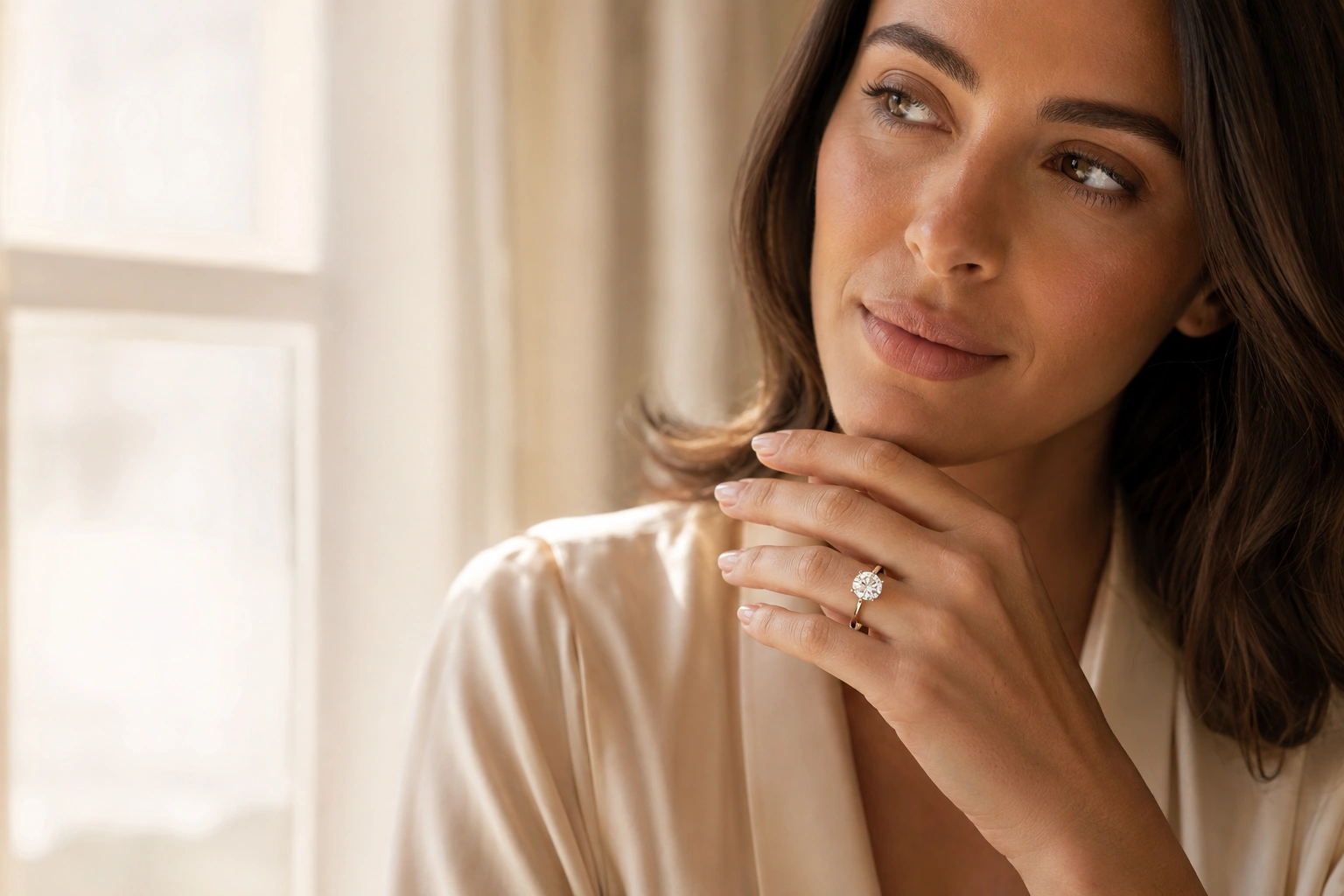
The engagement ring finger is the fourth finger, the one next to the little finger, often simply called the ring finger, and in Egypt and across the Gulf it is worn on the left hand. That custom holds for most Western and Middle Eastern countries, though a handful of European countries wear it on the right. There is no medical or religious rule behind the choice; it is tradition, and it is consistent enough locally that almost nobody has to ask before proposing.
Which finger is the engagement ring finger?
It is the fourth finger of the hand, counting the thumb as the first. Older tradition held that a vein ran directly from this finger to the heart, which is not true anatomically, but the story stuck, and the custom outlived the reasoning behind it. Today the answer is simply: that finger, on whichever hand local custom points to.
Which hand: left or right?
In Egypt, as in most of the Gulf and the wider Middle East, the engagement ring goes on the left hand. A minority of countries, including parts of Northern and Eastern Europe such as Germany and Russia, wear it on the right, then move it to the left at the wedding, or keep both rings on the right hand throughout. For a couple in Egypt, the left hand is the safe, expected answer, and it is where the wedding band joins it later.
Does the engagement ring move at the wedding?
Not usually in Egypt: the engagement ring stays on the left ring finger, and the wedding band is added to the same finger, typically placed closer to the hand so the engagement ring still sits at the tip once both are worn together. Some brides briefly move the engagement ring to the right hand during the ceremony itself, then move it back afterwards so the wedding band can be placed first. Either way works; it is a matter of preference rather than a fixed rule, and couples generally decide on the day itself with whoever is officiating.
Can both rings be worn together long-term?
Yes, and it is the most common outcome: the engagement ring and wedding band are worn stacked on the same finger for the rest of a marriage. This is one reason band shape matters at the design stage: a plain or shaped band that sits flush against the engagement ring, rather than fighting it, wears better day to day. Our guide to choosing a wedding band that actually sits with your engagement ring covers how the two are matched.
Does finger choice affect ring sizing?
Yes: fingers vary in width and taper differently from hand to hand, and the fourth finger is often a different size to the others on the same hand, which is why a ring cannot be sized from a different finger’s measurement. A setting that sits high, such as a solitaire or halo, also needs a touch more room than a flush bezel piece to clear the knuckle comfortably. Our guide to finding her ring size without ruining the surprise covers how to measure discreetly before proposing.
Does culture change the ritual around the finger?
The finger and hand stay constant in Egypt, but who does the placing and when varies by family. Some couples exchange rings privately at the proposal itself; others save the formal placing for an engagement gathering in front of both families, which is common practice locally. Either way, the ring goes on the same finger of the same hand; only the custom around the moment changes far more than the anatomy does.
Does the diamond shape affect how it wears on this finger?
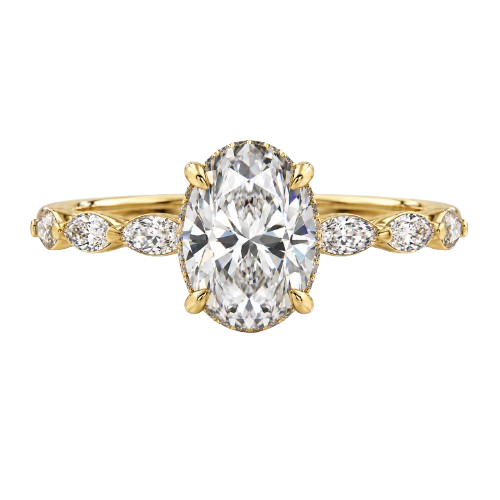
Somewhat. Elongated shapes such as oval, pear and marquise tend to sit along the length of the finger and can look larger without extra carat weight, which some buyers prefer on a fourth finger that already narrows toward the knuckle. Rounder shapes like round or cushion sit more compactly. Our diamond shapes guide sets out how each of the ten shapes CIZELE works with compares on the hand.
What if the ring doesn’t fit once it arrives?
A ring that feels tight or loose on the day is common enough that it is worth planning for rather than worrying about — fingers change slightly with temperature and time of day, and a ring measured once can still need a small adjustment once worn daily. Because the engagement ring finger and hand are fixed by custom, the ring itself is the variable, not the finger, so any small correction happens to the metal, not by choosing a different finger to wear it on.
Getting the ring itself right
Once the finger and hand are settled, the rest is design: stone, shape, setting and metal, chosen together and made to order over roughly two to six weeks from consultation to finished ring. Because the finger itself narrows and tapers, a good fitting matters as much as the design decisions above it, and it is worth confirming both together rather than settling the design first and the size as an afterthought. Outline a design on /create/, ask a quick question over WhatsApp, or book a private video consultation to talk through sizing and setting before anything is made.