Diamond Shapes Explained: All 10 CIZELE Cuts to Know
A guide to diamond shapes: all ten cuts CIZELE offers, how each looks on the hand, and how to choose one for an engagement ring or bespoke piece.
Diamond shapes are the outline a stone is cut into, not to be confused with its cut grade, and the shape is usually the first decision in designing a ring. CIZELE works with ten diamond shapes, each matched from certified inventory and set by hand once a shape and setting are agreed. This guide covers what each shape actually looks like on the hand and how to choose between them.
Round and princess: the classic brilliants
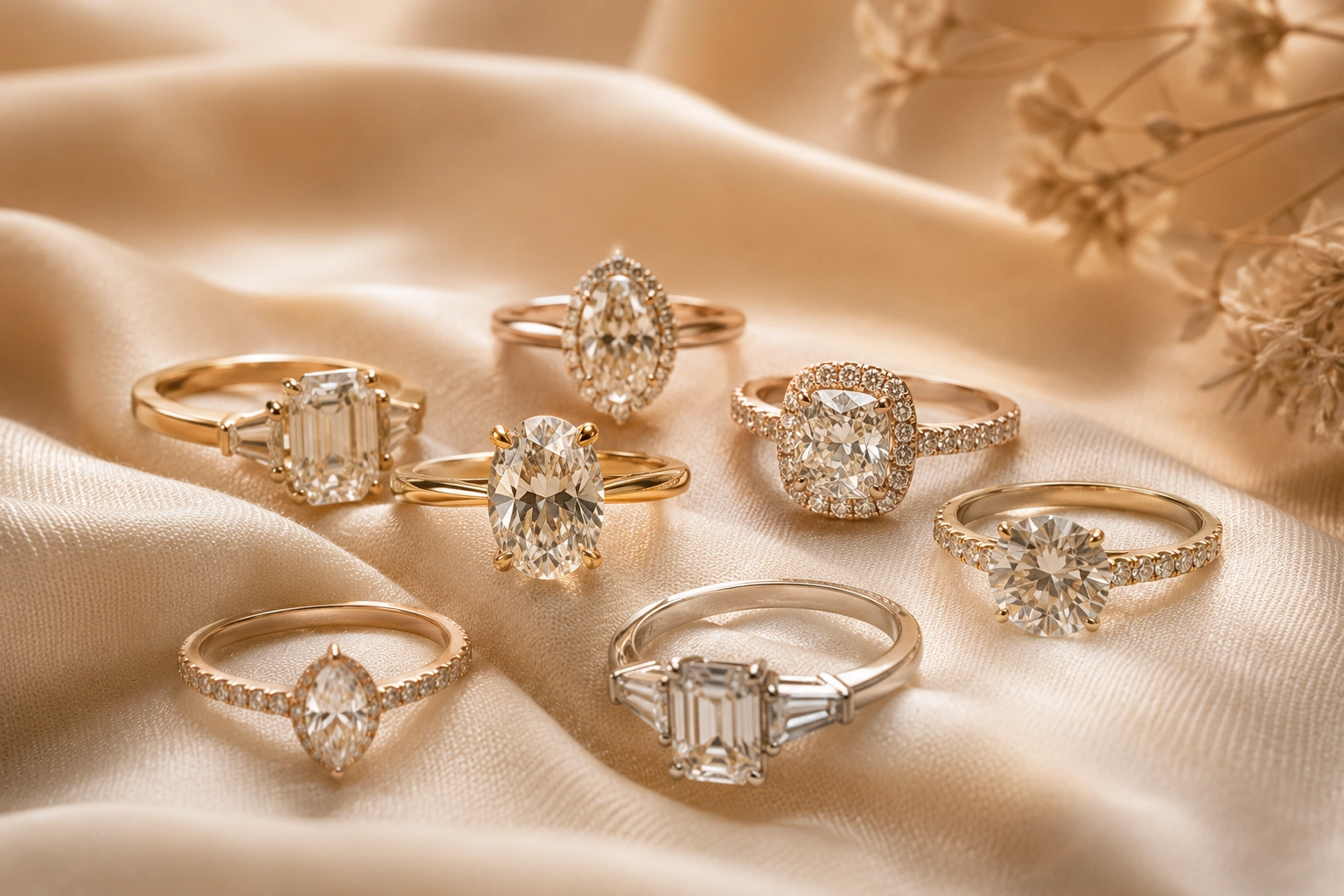
A round diamond is cut with the most facets of any shape, which is what gives it the most fire and sparkle under light. It is the shape most people picture when they think “diamond” and suits almost any setting, from a classic solitaire to a halo. Because the cutting process removes more of the rough stone, a round diamond of a given carat weight often costs more than a fancy shape of the same weight. A princess diamond is a square brilliant cut, combining the sharp lines of a step cut with the same light performance as a round stone. It is a common choice for anyone who wants a modern, geometric outline without losing brilliance, and it sits neatly in a pavé band.
Oval, pear and marquise: the elongated shapes
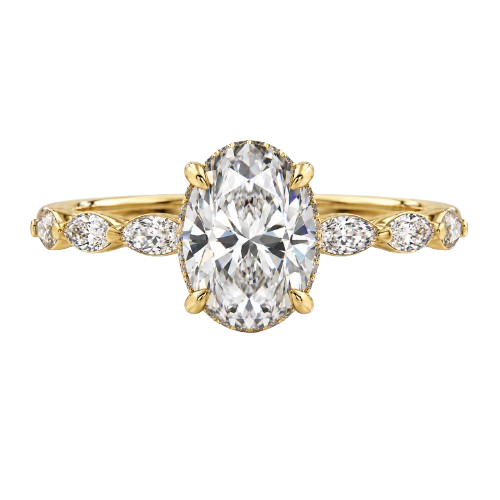
An oval diamond has the same brilliant faceting as a round stone but an elongated outline, which tends to make the finger look longer and the stone look larger for its carat weight. It is one of the more forgiving shapes for hiding small inclusions, since the brilliant cut scatters light across the stone rather than through a single flat table. A pear diamond, also called a teardrop, has one rounded end and one point, usually set with the point facing outward toward the fingertip, and suits both a solitaire and a toi et moi setting alongside a second stone. A marquise diamond has two pointed ends and a wide centre, maximising apparent size for its carat weight more than almost any other shape, with a distinctive, dramatic outline that, like the pear and oval, tends to make the finger look longer.
Cushion and radiant: soft, geometric shapes
A cushion diamond combines a squarish or rectangular outline with rounded corners, named for its resemblance to a pillow. It reads as softer and more vintage than a round or princess cut, and works well in an east-west setting where the stone sits sideways on the band. A radiant diamond is a rectangular or square cut with trimmed corners, sitting between a princess and an emerald in outline while keeping brilliant-style facets for sparkle. It is a practical choice for anyone who likes a softened rectangular outline but wants more fire from the stone than a step cut gives.
Emerald and asscher: the step-cut shapes
An emerald diamond is cut in rectangular steps rather than brilliant facets, giving it a hall-of-mirrors look with long flashes of light instead of scattered sparkle. Because the step cut shows the stone’s interior more plainly, clarity matters more here than with a round or cushion diamond of the same grade. An asscher diamond is a square step cut, essentially the square version of an emerald shape, with the same layered, mirrored look but a more compact outline. It has become closely associated with Art Deco style rings and suits a bezel setting that echoes its geometric lines.
Heart: the romantic shape
A heart diamond is the most explicitly symbolic shape, cut with a distinct cleft at the top and a single point at the bottom. It takes precise cutting to keep the two lobes symmetrical, and it is usually chosen deliberately for what it represents rather than for its light performance alone. Diamond shape describes the outline; diamond cut describes how well a stone’s proportions and facets are cut to return light, graded independently of shape, so cut grade is worth checking on the certificate whichever of the ten shapes is chosen.
How to choose between diamond shapes
Start with how the stone should look on the hand: round, princess and cushion read as classic and compact, while oval, pear and marquise elongate the finger and can look larger for the same carat weight. Then think about setting: a vine or twine band suits an elongated shape, while a bezel setting works well with a geometric outline like asscher or radiant. Certification matters whichever shape is chosen; CIZELE’s stones are certified GIA and IGI, and the difference between lab-grown and natural diamonds applies equally across all ten shapes. Readers still weighing shape against budget may find how much to actually spend on an engagement ring in Egypt useful before deciding.
Designing with a chosen shape
Once a shape feels right, the next step is matching a certified stone and choosing a setting and metal, either yellow, white or rose gold. CIZELE builds each ring to order once the design is agreed, generally about two to six weeks from consultation to finished piece. To start, describe the shape and setting in the ring builder, message CIZELE on WhatsApp at +20 150 160 5724, or book a private video consultation to see how different shapes compare before deciding.