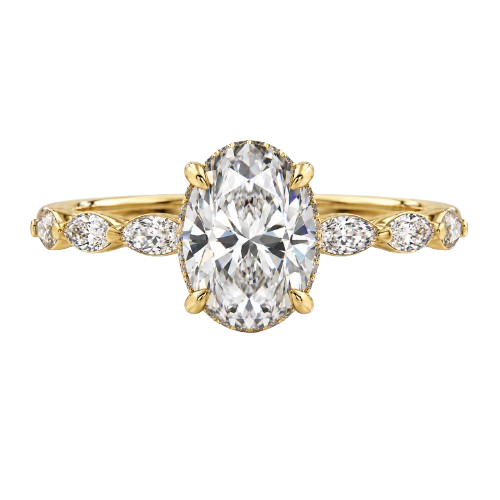
Pave vs Micro Pave: What’s Actually Different
Pave vs micro pave compared: stone size, how many diamonds are set, the look on the hand, and durability and care for each.
Pave vs micro pave comes down to stone size: pavé sets diamonds around 1.3mm to 2mm, while micro pavé uses smaller stones, generally under 1mm, set closer together for a finer, more continuous line of sparkle. Both are ways of setting many small diamonds into a band, and CIZELE builds both as part of its accent work.
What is pavé setting?
Pavé setting places small diamonds close together across a surface, held by tiny shared prongs or beads of metal, so the metal itself becomes almost invisible under the stones and the surface reads as continuous sparkle rather than individual diamonds. The French word means “paved,” describing how the diamonds cover the metal the way stones pave a street. Pavé is used on bands, on the shoulders of a ring either side of a centre stone, and sometimes on a halo around it, most often alongside a classic solitaire where the pavé adds sparkle without competing with the centre stone.
What is micro pavé, and how is it different?
Micro pavé is the same technique at a smaller scale: the diamonds are cut smaller, generally under 1mm, and set even closer together than standard pavé, which produces a finer, more textured shimmer rather than pavé’s slightly larger points of light. Because the stones are smaller, more of them are needed to cover the same area, which is the main practical difference buyers notice: a micro pavé band carries a higher stone count than a pavé band of the same length. The visual difference is subtle at arm’s length and becomes clearer only up close or under strong light.
Pave vs micro pave: the look on the hand
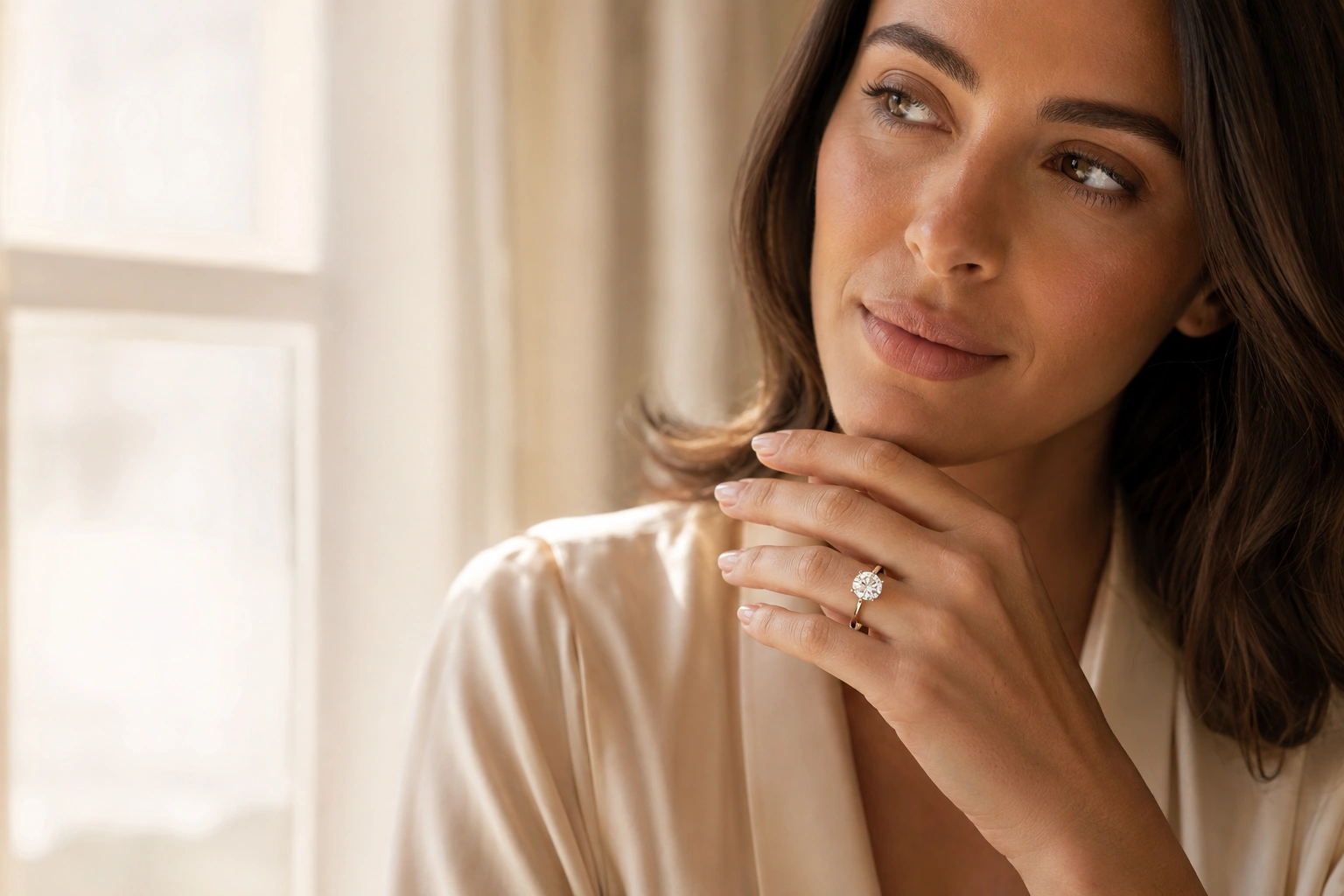
Standard pavé gives slightly more defined individual points of sparkle, each stone still just about distinguishable to the eye, which some buyers prefer because it reads as clearly made of diamonds rather than a general shimmer. Micro pavé blurs those individual points into a finer, more continuous glitter, closer to a dusting of light than a row of distinct stones. Neither look is better; it is a matter of how textured or how smooth the sparkle should read against the metal, and against the shape of the centre stone it is paired with.
Durability and care: does stone size change anything?
Smaller stones in micro pavé sit in smaller, more delicate prongs than standard pavé does, simply because the prong has to be sized to the stone it holds. Both settings are worn daily without special handling, but any pavé or micro pavé band benefits from the same care as other fine jewellery: avoiding knocks against hard surfaces and removing rings before heavy manual work, since a lost stone is more noticeable in a smaller, closely set pattern than in a single larger setting. CIZELE’s guide on choosing a wedding band that actually sits with your engagement ring covers how a pavé or micro pavé band is fitted to sit flush with an engagement ring, which also affects how exposed the stones are to daily wear.
Manual work like gardening, cleaning or gym training is where both settings are most at risk, since a knock that would simply scuff a plain band can catch a small prong directly. This is true of pavé and micro pavé equally; the smaller prongs in micro pavé are not necessarily weaker day to day, they are simply less forgiving of a direct, hard knock than a larger claw would be.
Which one costs more?
Micro pavé generally uses more individual stones to cover the same area than standard pavé, and setting smaller diamonds accurately takes more time, both of which tend to push micro pavé’s price above a comparable pavé design. The difference in total diamond weight between the two is often small, since the stones are simply cut in more, smaller pieces rather than fewer, larger ones; the cost difference sits mostly in the labour of setting so many tiny stones precisely. Buyers weighing this against a plain band or accent stones may find it useful to read CIZELE’s wider guide on how much you should actually spend on an engagement ring.
This labour difference is also why micro pavé takes slightly longer to set than a comparable pavé design, since each stone has to be placed and secured individually at a scale that leaves less room for error. It is worth factoring into a timeline alongside the wider lead time for a finished ring, generally about two to six weeks from consultation depending on the design.
Choosing between pave and micro pave with CIZELE
The choice usually comes down to how textured the sparkle should look and how it should sit against the engagement ring it is paired with, rather than one being a straightforwardly better option than the other. A band can be designed shape by shape in the ring builder, with pavé or micro pavé chosen and set from certified diamonds, lab-grown or natural as covered in the guide to lab-grown vs. natural diamonds, to match the ring it sits beside. To see the difference between the two on video or talk through which suits a specific ring, message CIZELE on WhatsApp at +20 150 160 5724, or book a private video consultation before anything is designed.