1 Carat Diamond Ring: Size, Shape and Price Guide
What a 1 carat diamond ring measures by shape, why two 1-carat stones can look different sizes, and how cut, colour and clarity change the price.
A 1 carat diamond ring centres a stone that measures about 6.5mm across in a round cut, and noticeably more or less in other shapes, but carat alone tells you almost nothing about how a given stone will actually look or what it costs once cut, colour and clarity are factored in. Two rings both described as “1 carat” can differ substantially in appearance and price for that reason, which is the part most first-time buyers are not warned about before they start comparing.
What 1 carat measures across each shape
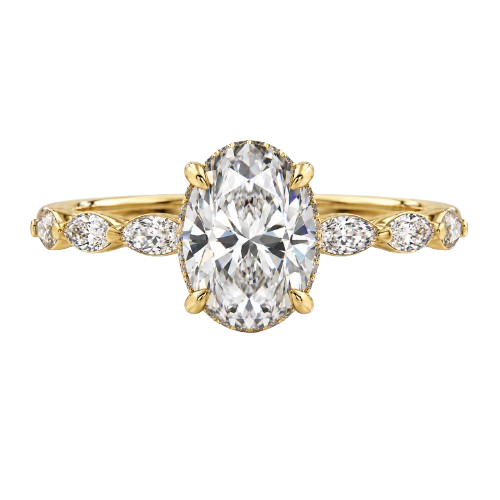
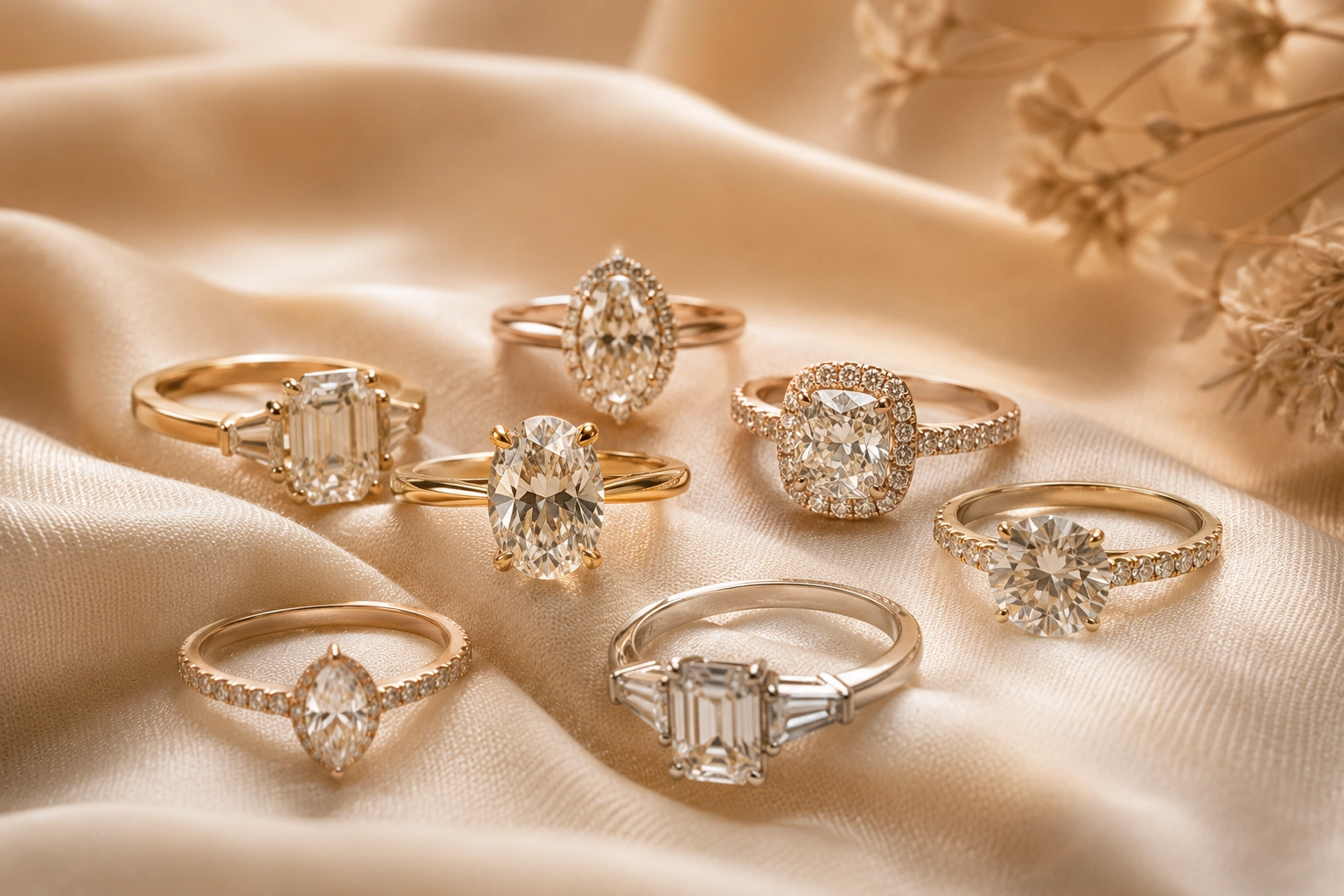
Carat is a unit of weight, not size, but for a given shape it corresponds fairly closely to a diameter or length. A well-cut 1 carat round brilliant measures close to 6.5mm across. An elongated shape reads larger for the same weight because more of its mass runs along its length rather than its width: a 1 carat oval typically measures around 7.5 by 5.5mm, and a 1 carat pear sits at a similar length with a narrower point. This is why an elongated cut is often chosen by people who want a stone to read larger on the finger without moving up in actual weight. A 1 carat marquise or emerald cut shows a similar pattern: both spread more of their weight along the length of the stone than a round does, so the same carat figure reads as a longer, more visible outline on the hand, though the effect is more pronounced in a marquise than in the straighter lines of an emerald cut.
Why two 1-carat stones can look different sizes
Cut quality affects a stone’s visible spread as much as its raw weight does: a diamond cut too deep hides some of its weight underneath the setting, appearing smaller from above than a shallower-cut stone of the same carat. Two 1 carat stones cut to different proportions, even in the same shape, can look measurably different in diameter when placed side by side, which is one reason a certificate’s cut grade matters as much as the carat figure printed next to it. A stone graded “excellent” or “ideal” for cut returns more light back through the top, so it can look brighter and, to the eye, marginally larger than a stone of identical weight graded only “good”, even though both carry the same number on the certificate.
How cut, colour and clarity change the price
Carat is only one of four factors that set a diamond’s price, and at 1 carat the other three move the number substantially. Cut quality determines how much a stone actually sparkles; colour grade determines how close to colourless it looks; clarity determines how visible any internal marks are without magnification. A 1 carat stone with strong grades across all three costs meaningfully more than a 1 carat stone that is merely acceptable on each, despite an identical carat weight. Our diamond cut guide and understanding your certificate guide both explain how to read these grades before comparing two stones on price.
Why pricing jumps right at 1 carat
Diamond pricing steps up sharply at whole-carat marks, because more buyers search for round numbers than for any figure just under them, not because the stone itself changes meaningfully at that exact weight. A stone cut to 0.9 carats can look identical to a 1 carat stone side by side while costing noticeably less, simply for sitting just under that pricing step. If the visual size of “1 carat” matters more to you than the certificate’s exact figure, it is worth asking a designer to show both weights against the same setting before deciding. If you have not settled on 1 carat specifically, our diamond carat size guide walks through the full range of weights and how each looks, so you can compare 1 carat against both smaller and larger options before committing to a figure.
How 1 carat looks on different finger sizes
A stone’s visual scale depends on the finger it sits on as much as its own measurements. On a narrower finger, a 1 carat stone reads as more prominent and can look larger than the same stone does on a broader hand, where it sits more in proportion. A low-set classic solitaire lets the stone show at its true size, while a raised setting or a halo of smaller stones around it can make the same carat weight read as larger still. Finger width also changes how a setting should be chosen: a wide band draws attention away from a smaller-looking stone, while a slim band lets the stone itself carry all the visual weight, which is worth deciding alongside carat and shape rather than after the ring is already made.
Choosing your 1 carat diamond ring with CIZELE
Every diamond CIZELE sets at 1 carat comes from live, certified inventory, natural or lab-grown, so the exact stone you see during design is the one that goes into the ring, not a placeholder. Start filtering by shape and weight on /create/, or bring the decision to a private video consultation, where a designer can show how different cuts and settings carry the same carat weight on your own hand. Lead time runs about two to six weeks from consultation to finished ring. Message CIZELE on WhatsApp for a quick question first.