
Choosing the Diamond for a Diamond Engagement Ring
A diamond engagement ring lives or dies on the stone. How to choose shape, carat and certificate, and view CIZELE's live inventory.
A diamond engagement ring is really two decisions: the setting, and the stone that sits in it. The setting is largely a question of taste. The stone is a question of shape, size, certificate and budget, and it is the one decision that is hardest to undo once a ring is made. This article is about that stone, not the ring around it.
A Diamond Engagement Ring: Shape First, Carat Second
Shape decides how a diamond looks on a specific hand before carat weight does. An oval or pear elongates the finger; a cushion or princess sits compact and square; a round is the shape every other cut is measured against for brilliance. CIZELE’s shape-by-shape breakdown covers all ten, but the only way to know how a shape reads on your hand is to look at it against your own fingers, not a photograph. Once a shape is chosen, carat size against the hand becomes the easier decision, because it is now carat within a shape rather than carat in the abstract.
What the certificate is actually for
Every diamond CIZELE sells is certified, GIA or IGI, and the certificate is what turns “a nice-looking stone” into a stone with a stated cut, colour, clarity and carat that can be verified independently of the seller. Reading a certificate means knowing which of the four numbers actually affects how the stone looks worn versus which mainly affects price; clarity and cut matter more to the eye than most buyers expect, and colour matters less past a certain grade than its price premium suggests.
A certificate is also where the gap between “on paper” and “on the hand” starts to close. Two stones can carry the same four numbers and still look different worn, because the certificate does not describe how a cutter balanced those numbers against each other: a slightly deeper cut can hide more colour than a shallow one at the identical grade, and a stone cut for face-up size rather than brilliance can read larger in a listing than it does once set. None of that shows up as a number, which is exactly why the certificate is a starting filter for a shortlist, not the final decision on a specific stone.
Shape and carat also trade against each other long before price does. An elongated shape such as oval or pear spreads the same carat weight over more visible face-up area than a deep, compact shape does, which is why two stones of the same carat weight can look like different sizes on the same finger. A buyer working to a fixed budget is really making three decisions at once, not one: shape, carat, and where on the clarity and colour scale to sit, and moving any one of those changes what the other two can afford. The honest approach is to fix the shape first, since it is the decision with the least flexibility once a ring is made, and then let carat and certificate grade flex against each other within that shape. CIZELE’s guide to carat size sets out how that trade plays out for every shape without pretending one rule fits all of them.
Natural or lab-grown
A diamond engagement ring’s stone can be natural, formed over geological time, or lab-grown, formed in weeks under the same pressure and heat conditions and graded by the same laboratories. CIZELE’s comparison of the two sets out the real differences: price per carat, resale expectations, and the fact that neither grades differently on a certificate for being one or the other. Lab-grown diamonds in Egypt have moved from a niche choice to a mainstream one largely on carat-for-carat value, which is worth reading before ruling either out.
What actually shows on the hand
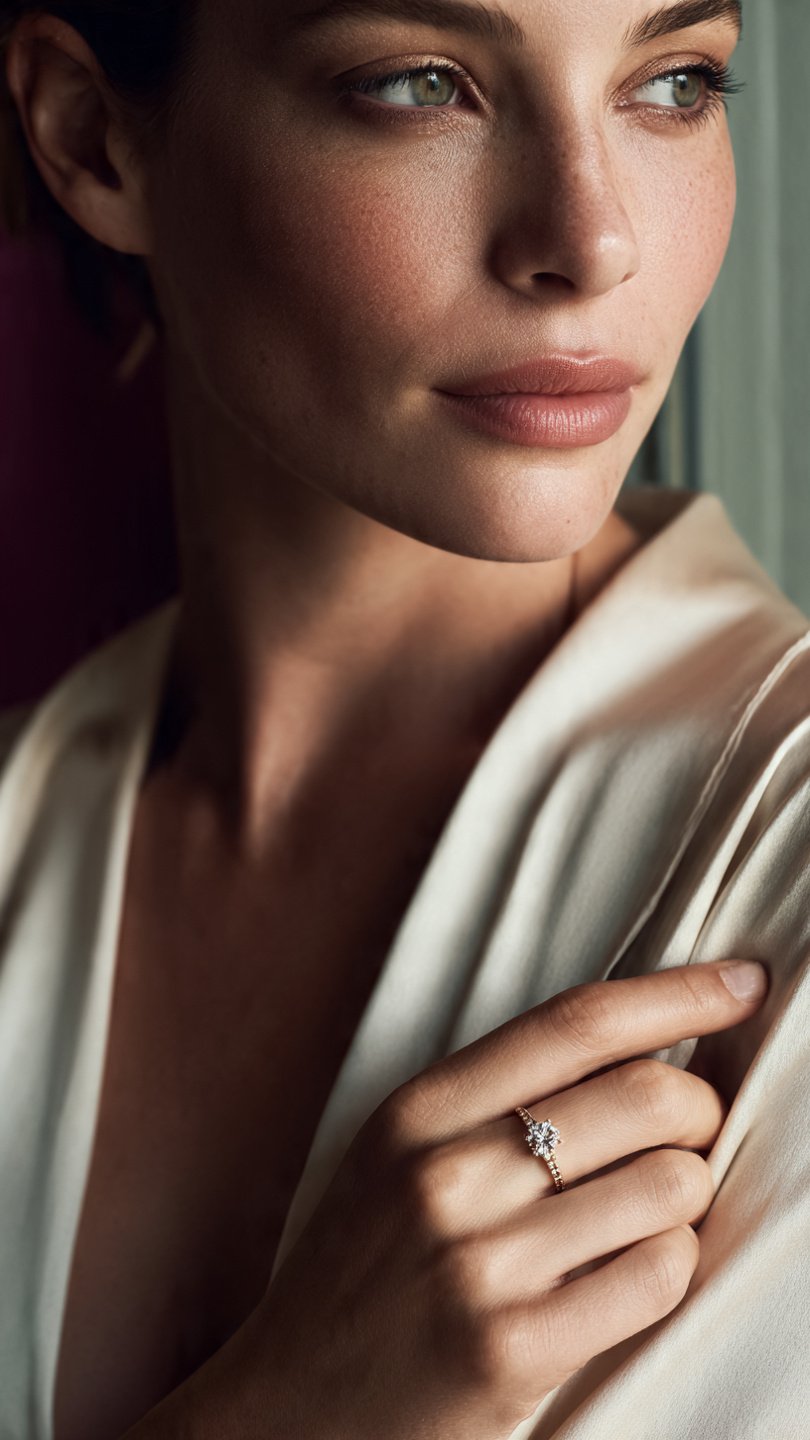
A certificate states facts about a stone in isolation; a hand shows a stone in a setting, under specific light, next to a specific skin tone. A halo makes a smaller centre stone read larger; a solitaire puts the stone’s own cut on full display with nothing to soften a weak one. This is the real argument for seeing a shortlist of real stones rather than deciding from numbers alone. CIZELE’s live diamond inventory lists more than a hundred certified stones by shape, carat, colour and clarity, lab-grown and natural, each with its own page and certificate. It is worth spending time there before a consultation, not instead of one: narrowing a shortlist to two or three stones makes the conversation that follows far more useful than starting from nothing, and it turns the shape and carat decisions above from theory into a short, specific list of real candidates.
Building the Ring Around the Diamond Engagement Ring Stone
Once a stone is chosen, or close to chosen, CIZELE’s ring builder sets the setting, metal and band around it rather than around a generic placeholder, which is the order that actually produces a ring that fits both the stone and the hand. Working this way means choosing the stone first, from the live inventory or from a shortlist discussed on a call, then the setting style, from a solitaire to a halo, then the metal, and only then the finer details of the band itself. A placeholder-first approach, picking a setting before a stone exists to put in it, is how a ring ends up fighting its own stone: a halo sized for a larger centre stone than the one eventually chosen, or a solitaire that leaves an oval looking loose in its claws.
A private video consultation is the next step if a shortlist still needs an outside eye on it. It is a conversation, not a sales call: bring two or three stones from the inventory, or none at all if the shape and carat are still open questions, and the call works through what actually suits the hand and the budget before any decision is final. There is no obligation attached and no online checkout at any point in the process. For a quick question about a specific stone, message CIZELE on WhatsApp.
