18k Gold Ring: What the Karat Really Means for You
What 18k gold actually means on an engagement ring, how yellow, white and rose gold differ, and how CIZELE crafts an 18k gold ring to order.
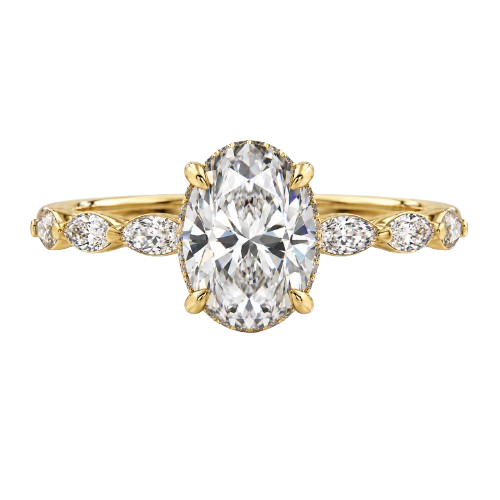
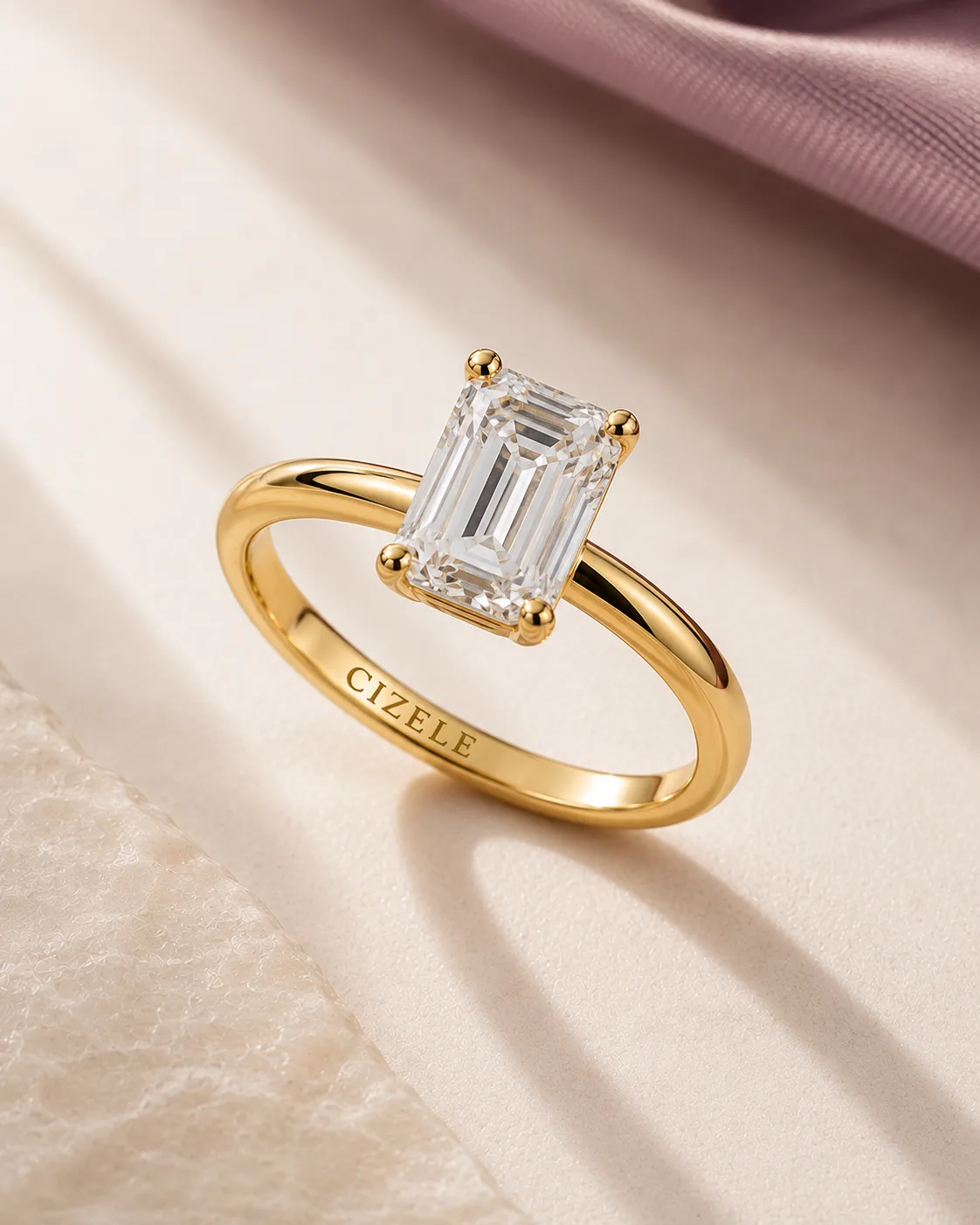
An 18k gold ring is made from an alloy that is 75% pure gold, the remaining quarter made up of other metals that give the alloy its colour and its strength. Pure gold on its own, 24k, is too soft to hold a diamond securely or survive daily wear, so every fine jewellery ring, including every CIZELE design, is made from an alloy rather than the pure metal. CIZELE crafts its rings in solid recycled 18k gold, in the buyer’s choice of tone.
Why 18k and not 24k or 14k
The karat number states how many parts in 24 are pure gold: 24k is pure, 18k is 75% gold, 14k is about 58%. A higher karat holds more of gold’s natural colour and resistance to tarnish but is softer, while a lower karat is harder and cheaper but looks and wears differently over years. 18k sits at the point jewellers most often choose for rings meant to be worn daily for decades: gold enough to keep its colour and value, alloyed enough to hold a diamond setting securely. The World Gold Council explains karat and fineness in more depth if you want the full range from 9k to 24k.
How 18k gold ring colour is set: yellow, white or rose
The karat number says nothing about colour; the metals alloyed with the gold decide that. Yellow gold is alloyed to stay closest to gold’s natural warm tone. White gold is alloyed with paler metals and usually finished with a rhodium plating to read as a cool, bright white. Rose gold is alloyed with a higher proportion of copper, which gives it its pink-red warmth. All three start from the same 18k gold and the same purity; the choice between them is entirely about tone, not about how much gold is in the ring.
What 18k gold means for wear and care
Gold is a soft metal even at 18k, so a ring worn every day will pick up fine surface marks over years the way any solid gold piece does; a jeweller can re-polish the surface without losing the setting. White gold rings in particular are usually re-plated with rhodium every so often as the plating wears thinner, which restores the bright white look. CIZELE’s wedding bands and engagement ring settings are both shaped as comfort-fit, solid recycled gold, and every CIZELE piece carries a warranty against faults in its making, plus free resizing if a ring no longer fits.
Choosing an 18k gold ring for an engagement ring or a band
An 18k gold ring works the same way whether it is a solitaire, a classic solitaire setting with a single diamond and nothing to distract from it, or a plain wedding band worn alongside it. What changes is how much metal shows and how it is shaped: a solitaire setting is mostly diamond and a thin band of gold, while a wedding band is solid gold from end to end, so the tone and finish of the gold matter more on a band than on a ring where a diamond does most of the visual work. CIZELE shapes each wedding band to the engagement ring it will sit beside, matched in metal and finish so an 18k yellow gold ring and its band read as one piece rather than two.
Diamonds set into an 18k gold ring
The metal is only half the decision; the stone set into it is the other. CIZELE sets certified diamonds, lab-grown or natural, graded GIA or IGI, the same grading explained in the guide to understanding your certificate. Neither the karat of the gold nor the choice between lab-grown and natural affects the other: both are independent decisions made at the design stage, and CIZELE’s designers can talk through both together rather than one at a time.
18k gold ring vs 14k: what actually changes day to day
The difference between 18k and 14k rarely shows up on the day a ring is bought; both look close enough to the eye that most people cannot tell them apart new. It shows up years later: 18k keeps more of gold’s natural depth of colour and needs less frequent care, while 14k, being harder, resists scratching slightly better but dulls in tone sooner and contains noticeably less actual gold for the same weight of ring. Neither is the objectively better choice; it is a trade-off between colour and value on one side and hardness on the other, and CIZELE works exclusively in 18k gold rather than offering both.
Two-tone and mixed-metal 18k gold rings
Not every 18k gold ring uses a single tone. CIZELE also makes designs in two-tone gold, pairing two of the three colours, most often yellow and white, in the same piece, which is one option worth raising at the design stage if a single tone feels like too plain a choice or if it needs to sit between an existing yellow gold piece and a white gold one. The 18k purity is identical across every tone and every combination; only the visible metals in the alloy change from one part of the ring to another.
Designing an 18k gold ring with CIZELE
An 18k gold ring, in yellow, white or rose gold, can be designed shape by shape on /create/, choosing the cut, the setting and the band before the diamond is matched to it. To ask about a specific tone or how a particular design will look in 18k gold, message CIZELE on WhatsApp at +20 150 160 5724, or book a private video consultation to go through metal, setting and stone together before anything is made. CIZELE’s guide to choosing a wedding band that actually sits with your engagement ring is a useful next read if you are planning the pair together.