Vine Engagement Ring: How the Design Actually Works
What a vine engagement ring is, which diamond shapes suit its curved setting best, and how to pair a wedding band with CIZELE's Vine design.
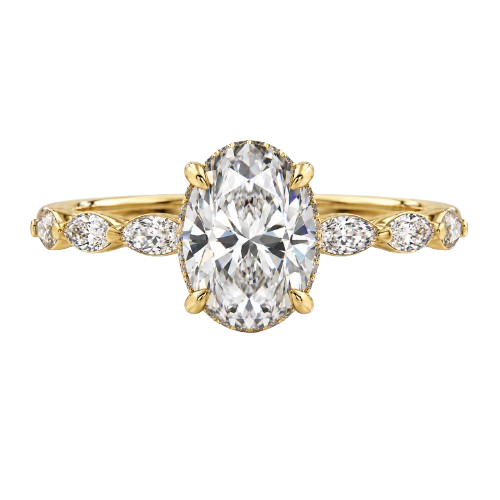
A vine engagement ring sets the centre diamond inside a line of metal that curves and climbs rather than sitting on a straight band, so the stone reads as something grown rather than clamped in place. CIZELE builds this as the Vine design: organic lines that climb toward the light, holding the diamond as if it grew there instead of being set into it.
What makes a vine setting different from a plain one
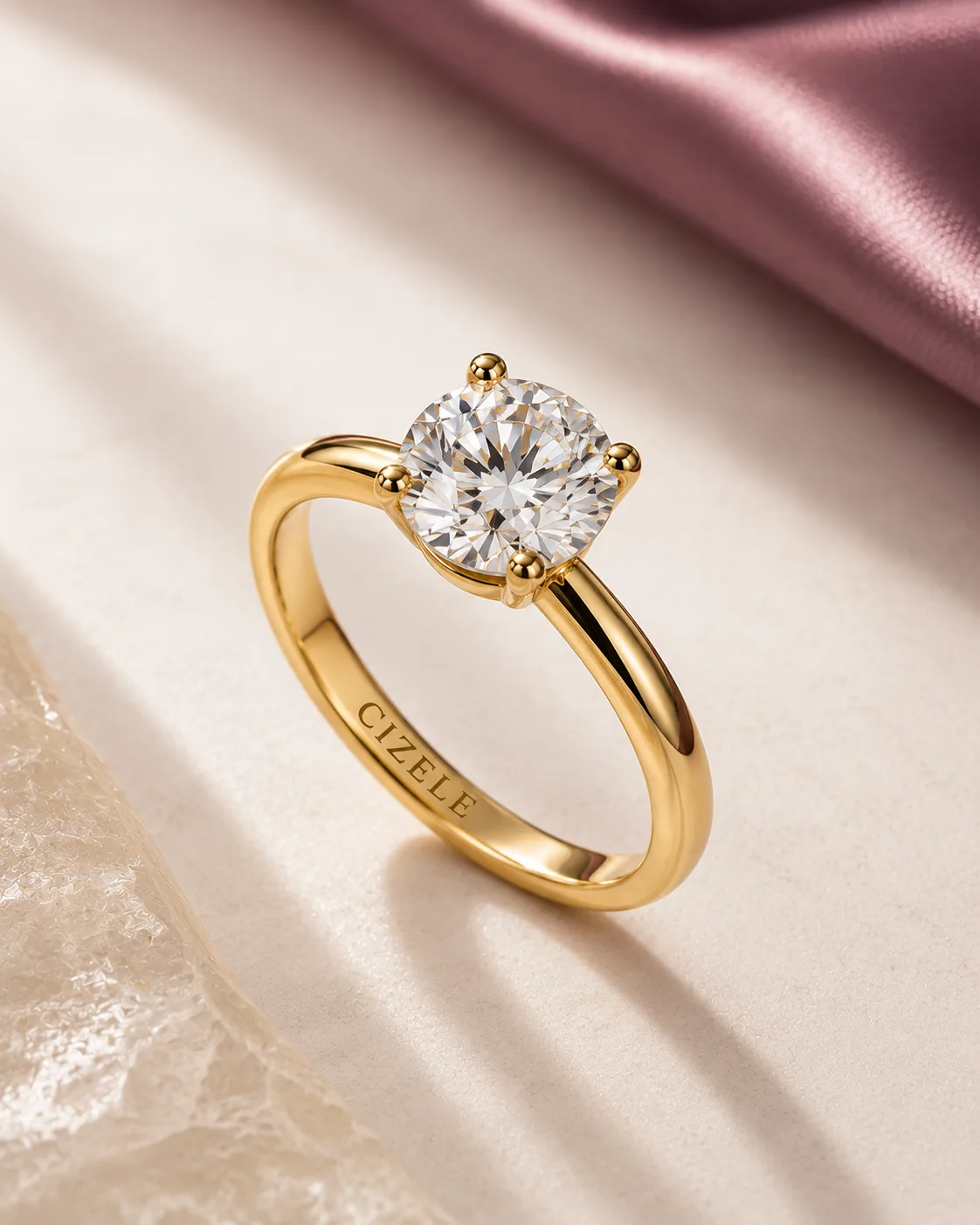
Most engagement ring settings hold the diamond above a straight band with prongs at four or six points. A vine setting instead runs curved lines of metal up from the band toward the stone, so the eye follows a line rather than landing on a fixed point. It reads as more organic and less geometric than a classic solitaire, where a single clean band carries the stone with nothing else to distract from it. Both are made to order in solid gold; the difference is entirely in how the setting moves around the diamond.
Which diamond shapes suit a vine ring
CIZELE’s Vine design is built around five cuts: emerald, marquise, oval, pear and round. Elongated shapes such as oval, pear and marquise tend to suit a vine setting particularly well, because their length gives the curved lines more room to wrap around the stone before meeting at the tip. A round or emerald-cut stone sits more centrally, so the vine lines read as a frame around it rather than an extension of its shape. Every shape is available as a certified diamond, lab-grown or natural, graded GIA or IGI, the same standard covered in CIZELE’s guide to understanding your certificate.
A simple vine engagement ring vs a fuller one
Someone searching for a simple vine engagement ring is usually asking for the same organic line without extra detail on the band. CIZELE builds the Vine design with a choice of band type, plain, pavé or accents, so a plain band keeps the design to its cleanest form: the curved setting doing the work and nothing else competing for attention. Adding pavé or accent diamonds along the band keeps the vine shape but gives it more overall sparkle, which is the usual trade-off between a simple version and a fuller one rather than a different design altogether.
Metal and setting height
The Vine design is made in yellow gold, white gold or rose gold, each solid recycled gold rather than plated. It also comes with a choice of setting profile, high set or low set. A high setting lifts the diamond further off the finger, which suits an elongated shape like oval or marquise where extra height lets more light reach the stone from the side. A low setting sits the diamond closer to the hand, which some people prefer for a ring worn daily under gloves or during manual work. Neither changes the vine line itself, only how far the diamond sits above it.
Pairing a wedding band with a vine engagement ring
A curved, organic setting is one of the harder shapes to sit a straight wedding band against, because a plain band leaves a visible gap where the vine lines rise off the finger. CIZELE shapes each wedding band to the engagement ring it will sit beside, flush to the setting and matched in metal and finish, so the two read as one piece rather than two rings pushed together. The same fitting logic is covered in CIZELE’s guide to choosing a wedding band that actually sits with your engagement ring, which is worth reading before ordering either ring if you plan to wear them stacked from the start.
Vine compared with CIZELE’s other organic designs
CIZELE’s collection includes a second, closely related design, Twine, which shares the same made-to-order approach in solid gold but is built around a different set of cuts, emerald, marquise, pear and round rather than Vine’s five, and adds a two-tone metal option that Vine does not offer. The two are easy to confuse by name but read differently as designs: Vine’s line is described on CIZELE’s own pages as climbing toward the light, while Twine works within a narrower set of shapes and a wider set of metal tones. Anyone drawn to the organic, non-traditional end of CIZELE’s collection is usually choosing between these two rather than between Vine and a conventional solitaire.
What to check before ordering a vine ring
A vine setting is more particular about fit than a plain band, because the curved lines that make the design distinctive are also the part most likely to catch on gloves, fabric or hair if the height or width is wrong for daily wear. This is exactly the kind of detail worth raising at the design stage rather than after the ring is made: how high the setting sits, how the curved lines feel against the base of the finger, and how the chosen diamond shape fills the space the vine lines leave for it. CIZELE’s designers go through this on the video consultation before a design is finalised, alongside the choice between a lab-grown or natural stone and the certificate that comes with it.
Designing a vine engagement ring with CIZELE
A vine engagement ring can be built shape by shape on /create/: choose the cut, the metal and the band type, then the diamond that belongs in it is matched afterwards from certified inventory. If it helps to see a reference image or talk through how the curved setting will sit against a particular hand, send it on WhatsApp at +20 150 160 5724, or book a private video consultation to go through cut, metal and band together before anything is made.