Where to Buy an Engagement Ring in Egypt: A Modern Guide
Buying an engagement ring in Egypt has quietly changed. Here is how to buy well today, what to look for, and the questions that actually matter.
Buying an engagement ring in Egypt used to mean one thing: walking into a gold shop in Khan el-Khalili or a downtown arcade and choosing from a tray. That still exists, and for some people it is exactly right. But the way couples buy has quietly widened, and if you are starting the search now, it helps to understand the options before you spend.
The three ways people buy today
Broadly, an engagement ring in Egypt is bought one of three ways. Understanding which one you are choosing is half the decision.
- Ready-made from a jeweller. Fast and tangible, you see it and take it. The trade-off is that you are choosing from what happens to be in the case, and the stone and setting come as a pair.
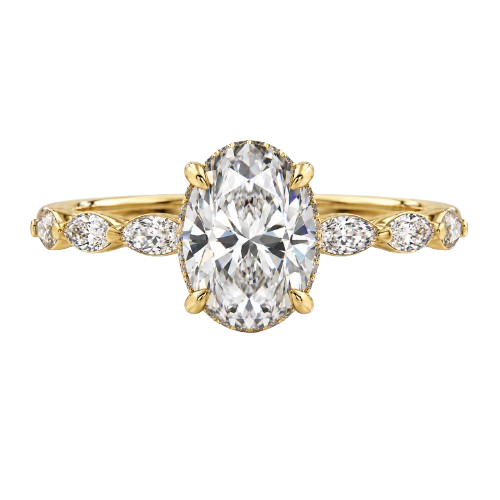
- Made to order (bespoke). You choose the diamond and the design separately, and the piece is made for you. This is how most fine jewellery is actually produced internationally, and it is increasingly available locally. It takes a few weeks, but you get exactly what you want.
- Imported or bought abroad. Some couples buy while travelling. It can work, but you lose the ability to see the stone in person, to adjust, and to build a relationship with someone who can service the ring later.
Natural or lab-grown?
The biggest shift in the last few years is the arrival of lab-grown diamonds. They are real diamonds, chemically and optically identical to mined ones, grown in a matter of weeks rather than found. The market for them in Egypt is still young, which means two things: fewer places offer them, and the couples who do choose them often get considerably more size and clarity for the same budget. Natural diamonds remain a completely legitimate, and for many people preferable, choice. Neither is “better”, they are different products at different price points.
The questions actually worth asking
Whoever you buy from, a few questions separate a good purchase from a regret:
- Is the diamond certified, and by whom? GIA, IGI and HRD are the labs to trust. Ask to see the certificate, and ask whether the stone’s laser inscription matches it.
- Can I see the stone loose, before it is set? A stone is far easier to judge out of a setting.
- Who makes the ring, and can it be adjusted or repaired later? Sizing, re-tipping prongs and re-polishing are normal over a ring’s life. Buy from someone who will still be there.
- What am I actually paying for? With fine jewellery, the honest answer is the stone, the metal weight, and the hand-work. Everything else is markup.
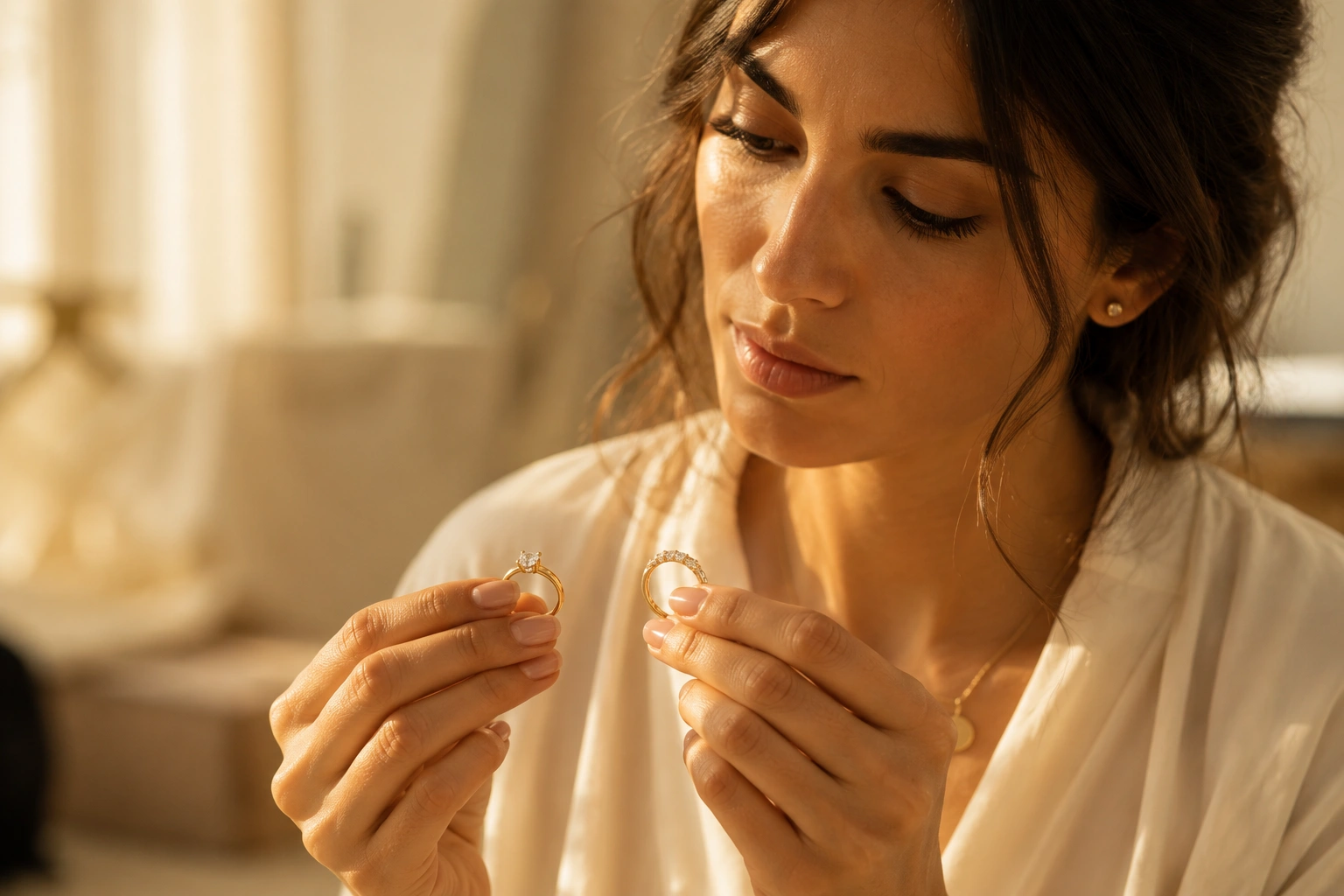
The best ring is not the biggest stone you can afford. It is the one that fits the person, the hand, and the way they actually live.
Why made-to-order is winning
The reason bespoke has grown, in Egypt and everywhere, is simple: it removes the compromise. You are no longer choosing the least-wrong ring in the case. You pick the cut she loves, the metal that suits her skin, the diamond that fits the budget, and the piece is built around those decisions. It costs less than people expect, because you are not paying for a showroom’s standing inventory, and it usually takes four to eight weeks.
Wherever you buy, buy from someone who will show you the stone, explain the trade-offs plainly, and stand behind the piece afterwards. That, more than any single feature, is what a good engagement-ring purchase looks like in Egypt today.
Made to order · finished by hand
Skip the showroom markup. Design your ring around the diamond you choose, made to order.