Rose Gold Engagement Ring: Why It’s Pink and Tougher
A rose gold engagement ring gets its colour and its strength from copper in the alloy. What that means for wear, tone and choosing a diamond shape.
A rose gold engagement ring gets its colour from copper. Gold is naturally yellow, and alloying it with a higher proportion of copper than yellow or white gold use is what turns it pink; the more copper in the mix, the deeper the rose tone. That same copper also makes rose gold alloys harder than yellow gold at the same karat, which is a genuine wearing advantage, not just a colour choice.
Why is rose gold pink in the first place?
Pure gold has no pink in it at all. The colour comes entirely from copper added to the alloy: a higher copper content shifts the tone toward a deeper rose or even a coppery red, while a lower content gives a softer, more muted pink. Two rings both labelled “rose gold” can look noticeably different depending on exactly how much copper is in the mix, which is worth asking about rather than assuming.
Does copper make rose gold stronger?
Yes, generally. Copper is a harder metal than gold, so an alloy with more of it resists scratching and daily wear slightly better than yellow gold at the same karat, one of the few cases where the metal that looks softest is actually the more durable choice. It is not a reason on its own to choose rose gold over another colour, but it is a genuine practical point in its favour worth knowing before deciding purely on looks.
How does karat interact with rose gold?
The same karat rules apply as any other gold colour: karat measures the proportion of pure gold in the alloy, and it is the main thing (beyond colour) that determines how the ring wears over decades. CIZELE’s 21k gold vs 18k gold guide covers that decision in full, since it applies just as much to rose gold as to yellow or white.
Which diamond shapes suit a rose gold engagement ring?
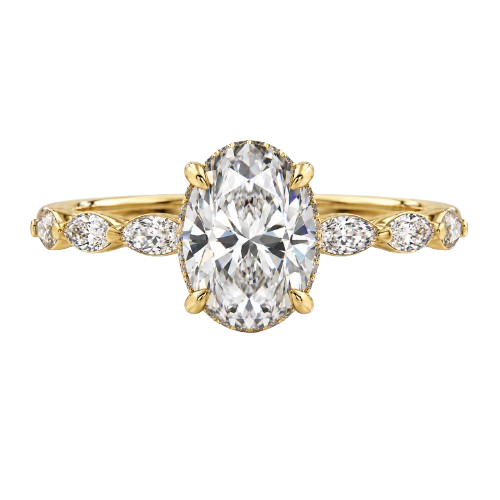
Rose gold’s warmth flatters diamonds across the colour scale, including ones with a faint warm tint that would look more obvious against a cooler metal. It pairs particularly well with softer, romantic outlines: an oval or a cushion both sit beautifully against the warmer tone, though any of CIZELE’s ten diamond shapes can be built in rose gold, natural or lab-grown.
Which settings work best in rose gold?
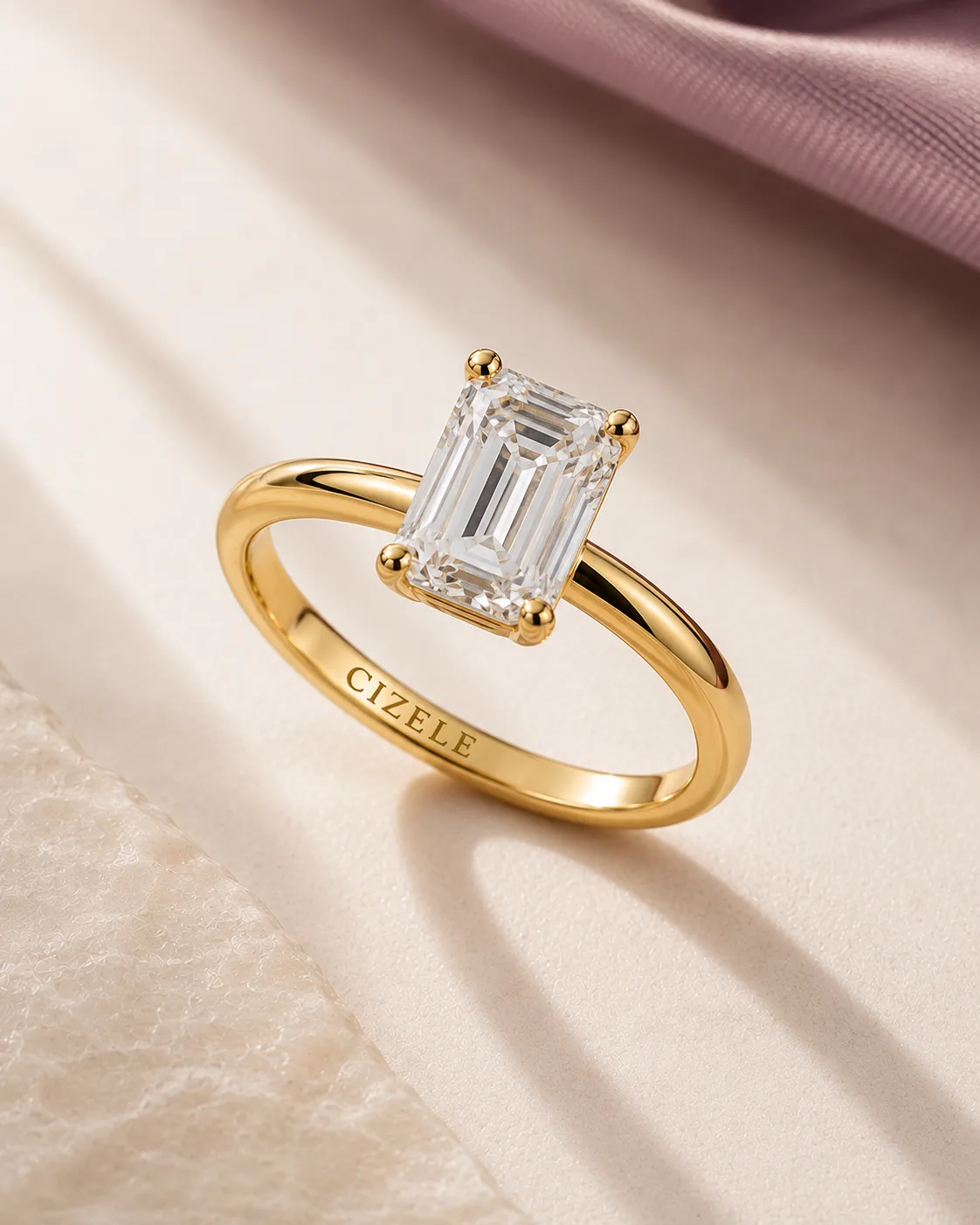
A classic solitaire keeps the focus on the stone against the warm metal, with nothing to distract from it. A toi et moi, two stones side by side, also reads especially well in rose gold, where the warmth ties the two stones together visually. Either is built to order around the exact diamond and hand it is going on, the same way CIZELE approaches any custom engagement ring.
Is rose gold a passing trend?
It has held steady as one of three core gold colours for over a decade rather than spiking and fading like a genuine trend, and CIZELE offers it as a standing option alongside yellow and white for exactly that reason. Whether it suits you comes down to skin tone and personal preference, not fashion cycles, so it’s worth trying against your own hand before deciding, not just judging it on a screen.
Does rose gold need any special care?
Not beyond what any gold ring needs: it does not need re-plating the way a white gold ring’s rhodium finish eventually does, since the colour comes from the alloy itself rather than a surface coating. Day-to-day care, avoiding harsh chemicals and taking it off for very physical work, is the same as for any fine gold ring.
Does rose gold suit a halo or an eternity-style band as well as a solitaire?
Yes. A halo adds a ring of smaller diamonds around the centre stone, and the warm metal beneath makes the whole cluster read a shade softer than the same design in white gold or platinum. Bands with diamonds set along the shoulders sit well against rose gold too, for the same reason a solitaire does: the warmth of the metal is a background, not a competitor, to the stones on top of it.
Does the copper content change the ring’s weight?
Only marginally, since copper is a small part of the overall alloy by comparison with gold, and any difference is not something a wearer would notice on the hand. It is worth mentioning only because it closes the loop on why rose gold behaves differently from yellow or white gold at all: one added metal, copper, accounts for the colour, the added hardness, and effectively nothing else. It is also why rose gold reacts to skin oils and everyday chemicals in broadly the same way as any other gold alloy, since copper does not change how the ring is cleaned or cared for day to day.
If a rose gold engagement ring is the direction you’re leaning, design yours on /create/ around your own stone and shape, or talk it through on WhatsApp: wa.me/201501605724. A private video consultation is also available if you want to see rose gold next to yellow or white before committing.