Promise Ring vs Engagement Ring: What’s the Difference
A promise ring is smaller and quieter than an engagement ring. See how the two really differ, and how to design a bespoke diamond one at CIZELE.
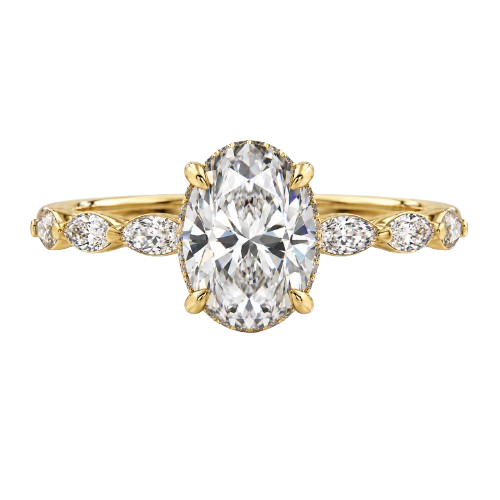
A promise ring is a ring given as a personal commitment before an engagement, not instead of one. It usually carries a smaller stone, a simpler setting, and no expectation of a formal proposal to follow. An engagement ring, by contrast, signals a specific intention: marriage, with a wedding to plan. If you are choosing between the two, the difference sits less in what the ring looks like and more in what it is meant to say.
What does a promise ring actually mean?
A promise ring marks a commitment two people are making to each other, on their own terms and their own timeline. It can be given before a proposal, as a step towards one, or as a standalone gesture that has nothing to do with marriage at all — a promise to stay faithful, to move somewhere together, or simply to mark that the relationship is serious. Because it carries no fixed meaning the way an engagement ring does, the two people wearing and giving it decide what it stands for.
This open-endedness is also why it works well as a first bespoke diamond piece for a couple who are not ready for the engagement conversation yet, but want something with weight to it. It is a gesture, not a legal step, so there is no script to follow and no set moment it has to happen at — a quiet evening works as well as a planned one.
How does it differ from an engagement ring?
The clearest differences between the two are in scale, not sentiment.
- Stone size. It usually carries a smaller diamond than an engagement ring, often a single accent stone rather than a centre stone meant to be the focal point.
- Setting. The setting tends to be simpler — a bezel or a plain band with one stone — rather than the raised, light-catching settings built to showcase a larger diamond, such as a solitaire.
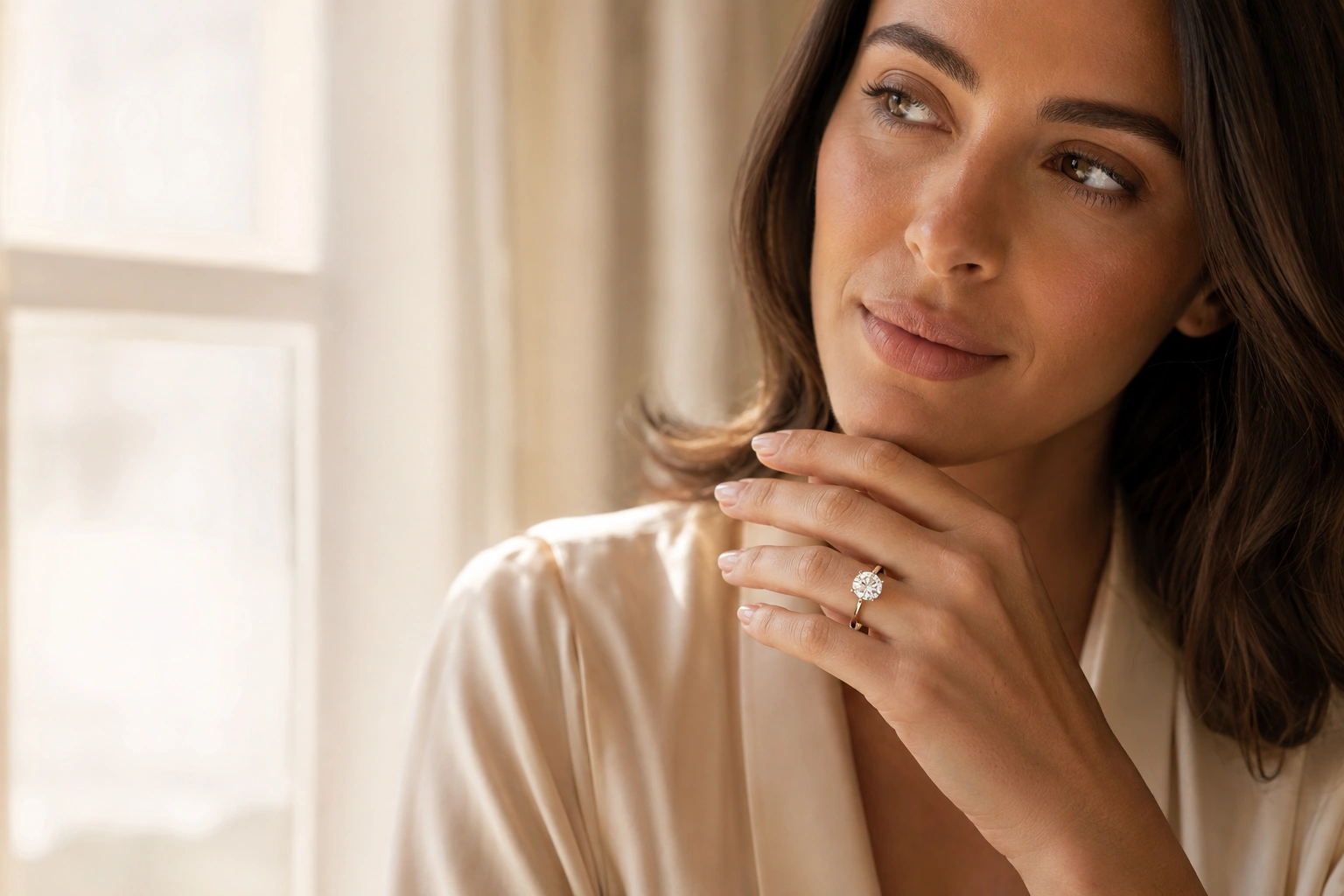
- Which hand and finger. There is no fixed rule, but this kind of ring is commonly worn on the right hand or a different finger of the left hand, keeping the left ring finger free for an engagement ring later.
- What it signals. An engagement ring says a wedding is being planned. This one says something is being committed to, without naming what happens next.
Neither piece has a required stone shape or metal. Some couples choose the same shape they would later pick for an engagement ring, as a preview of what is to come; others deliberately choose something different, so the two pieces never look alike. Reading how engagement rings are actually priced in Egypt is a useful comparison if budget is part of the decision between the two.
Can it carry a diamond?
Yes. A ring like this, made at CIZELE, is built the same way any bespoke piece is: from a diamond, a shape, a setting and a metal, chosen together rather than picked off a shelf. Diamonds are natural or lab-grown, both certified, and the choice affects budget and carat weight more than appearance. A smaller stone in a round, oval or pear shape reads as a lighter, quieter piece largely because of its scale and setting, not because certain shapes are reserved for one occasion over another.
If certification matters to whoever is receiving it, it is worth reading how GIA and IGI reports are read before choosing a stone — see our guide to understanding your certificate, or the grading standards published directly by GIA.
What setting and metal work best?
Because a ring like this is usually worn daily and often for years before any engagement ring joins it, durability matters as much as design. A low-profile bezel setting protects the stone from knocks better than a raised prong setting, which suits an active daily ring. For metal, yellow gold, white gold and rose gold are all available in recycled gold, alongside platinum; the choice is about tone against skin and existing jewellery rather than one metal outlasting another.
A toi et moi design, with two stones set side by side, is one some couples choose specifically because it can represent two people rather than a single focal diamond — a different kind of statement to a solitaire. Couples who want the option to add stones later sometimes start with a plain band and build up to accents over time.
How much smaller should the diamond be?
There is no fixed ratio, but the working idea is that this kind of ring should read as a quieter piece than whatever engagement ring might follow it. A smaller total carat weight, a single stone instead of a halo or pavé band, and a slimmer band all keep the visual weight down. If an engagement ring is a possibility later, some couples deliberately keep this stone noticeably smaller so the two rings are never mistaken for each other, and so the engagement ring still feels like a distinct moment when it arrives — the same reasoning covered in our realistic timeline for proposing in Egypt, for anyone weighing up when each ring should appear.
How do you start designing a promise ring?
A bespoke piece like this at CIZELE starts the same way any ring does: from a sketch, a photo, an heirloom stone, or just a description of what it should feel like. There is no obligation attached to a first conversation, and a design can be finished from consultation to ring in about two to six weeks, depending on the setting and stone.
Ready to start? Design the outline on /create/, send a description over WhatsApp, or book a private video consultation to talk through stone, setting and metal before anything is made.