East-West: The Cut Turned Sideways, Quietly Unexpected
How rotating an elongated diamond 90 degrees changes its entire read, which cuts actually suit it, and who chooses it.
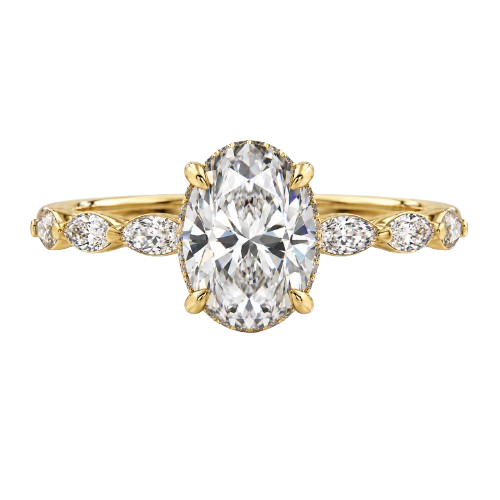
An elongated stone, rotated 90 degrees, so its long axis runs across the finger. Nothing about the diamond changes, only its orientation, and that alone changes the entire read of the ring.
- Works best on elongated cuts: oval, marquise and emerald, not round or square stones.
- A deliberate, considered choice, not a manufacturing default, which is exactly its appeal.
- Changes how the hand reads, a horizontal stone draws the eye across the finger rather than along it.
- Pairs with any setting style, solitaire, halo and three-stone all rotate equally well.
Why a 90-degree rotation changes everything
Every elongated diamond cut, oval, marquise, emerald, radiant, is designed with an assumed vertical orientation, the long axis running up the finger toward the knuckle. Rotating it east-west does not change a single fact about the stone, its carat, its cut, its clarity are identical, but it changes every visual assumption a viewer brings to the ring. A vertical oval reads as elongating the finger; the same stone east-west reads as a deliberate, almost sculptural statement, because it is so rarely how the cut is expected to sit.
Which stones actually suit it
Ovals and marquise cuts suit an east-west orientation particularly naturally, their pointed or curved ends read cleanly in either direction. Emerald and radiant cuts can work east-west too, but the effect is more architectural and more polarizing, worth seeing on your actual stone before committing, since the effect depends heavily on the stone’s specific length-to-width ratio.
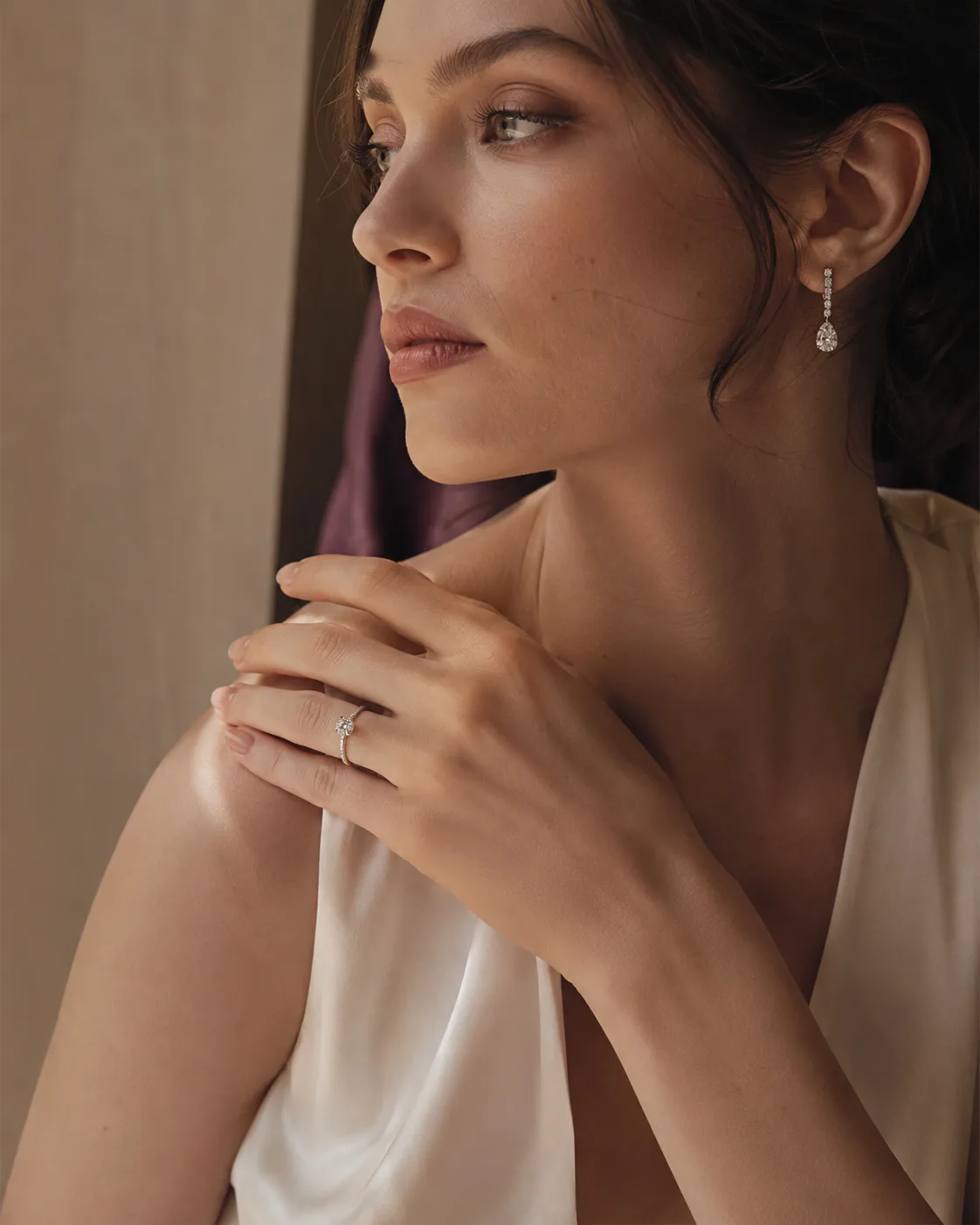
The same stone, seen from a different angle entirely.
Who chooses east-west, and when
This is a setting chosen almost exclusively by clients who already know they want something quietly distinct, rarely a first instinct, almost always a deliberate second thought after seeing the traditional orientation and wanting something less expected from the same stone. It suits a client who wants a genuinely individual ring without changing the setting style itself, solitaire, halo or trilogy all rotate equally well.
Styling it well
Because the stone sits wider than it is tall, an east-west ring can sit slightly higher off the hand than the same stone vertically oriented, worth trying on before deciding if you wear rings alongside manual work often. A simple band lets the rotation itself stay the visual focus.
East-west or traditional orientation
Choose east-west if you want your chosen cut to feel deliberately unexpected rather than default. Choose the traditional vertical orientation if you want the cut’s classic, most recognizable read, an oval that elongates the finger the way it is designed to.
Living with an east-west ring
Maintenance is identical to the same stone and setting in its traditional orientation, rotation changes nothing structural. The one practical note: a wider stone profile sits slightly more prominently on the hand, worth confirming comfort against your specific finger and daily activities.