Diamond Carat Size: Why Weight Isn’t Size
Diamond carat size explained: carat is weight, not size, how shape changes how big a diamond looks, and how to compare on CIZELE.
Diamond carat size is a common phrase, but carat is a measure of weight, not physical size. One carat equals 0.2 grams; two diamonds of the same carat weight can look noticeably different across the top depending on their cut and shape. Understanding this before choosing a shape avoids a diamond that reads smaller than expected once it’s set.
Carat is weight, not size
A carat is a unit of mass, unrelated to millimetres across the top of the stone. Cutting a diamond deeper, so more of its weight sits below the girdle, keeps carat weight high while shrinking the visible face-up area. Cutting it shallower spreads that same weight wider, so it looks larger from above. This is why two one-carat diamonds from different cutters can look like different sizes side by side, and why carat weight alone is a poor way to judge how big a diamond will actually look on a hand.
Diamond carat size by shape
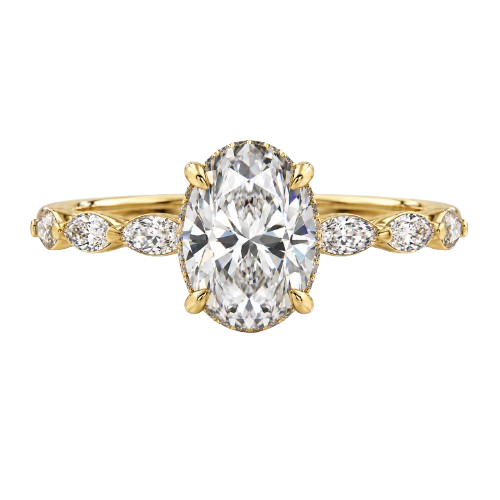
Elongated shapes generally show more spread for the same carat weight than round ones, because their outline covers more surface area relative to their depth. A pear, marquise or oval diamond typically looks larger than a round diamond of the same carat weight, because more of the stone’s face is visible rather than hidden in depth. Step cuts like emerald and asscher shapes show less sparkle but a broad, open table that reads as size at a glance. A cushion or princess cut sits between the two: more compact than an elongated shape, more spread than a very deep round brilliant. Choosing a shape for apparent size, rather than carat weight alone, is often the more useful decision.
Setting affects how large a diamond looks
The setting around a diamond changes how large it reads even before shape is considered. A halo surrounds the centre stone with smaller diamonds, adding visual size without adding carat weight to the main stone. A plain solitaire shows the diamond alone with nothing to compare it against, so its true size is more honestly visible. A bezel setting, which wraps a metal rim around the stone, can make a diamond look slightly smaller because the rim interrupts the outline, though it is also the most secure setting for daily wear.
Comparing carat weight to your budget
Diamond price rises faster than carat weight, particularly at round-number thresholds like 1.00 or 2.00 carats, because demand concentrates there. A diamond just under a round number, say 0.95 carats, often costs meaningfully less than one just over it with no visible difference in size. CIZELE’s guide on how much to actually spend on an engagement ring in Egypt covers this trade-off between carat weight and total budget in more detail. Diamonds from live inventory can be filtered by carat, shape and certification to compare real stones rather than averages, and both lab-grown and natural options are graded the same way.
Carat weight on two hands
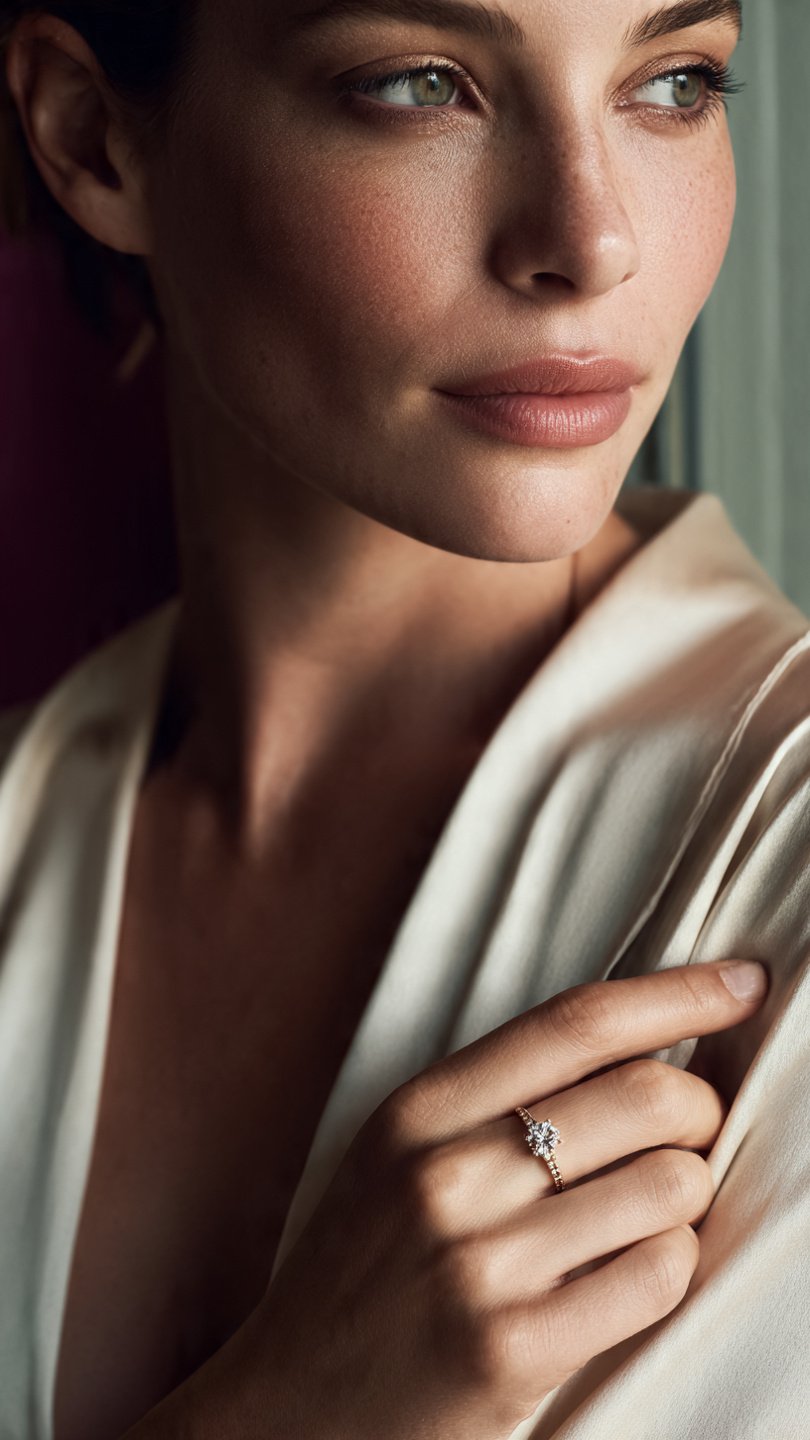
The same carat weight can look different from one hand to another, not just from one shape to another. A diamond on a narrower finger has less surrounding width to compete with, so it reads larger at the same carat weight than it would on a broader hand. This is one reason a diamond that looked a certain size in a photograph or on someone else’s hand can look different once it’s actually on the finger it’s being bought for, and it’s part of why CIZELE prefers to talk through carat and shape together on a call rather than by chart alone.
Reading the certificate before comparing carat weight
A diamond’s certificate states carat weight alongside cut, colour and clarity grades, and cut grade in particular is the best indicator of how well that weight has been used. CIZELE’s guide to understanding your certificate explains how to read a GIA or IGI report line by line. For an outside reference on how cut proportions affect a diamond’s appearance independent of carat weight, GIA’s own education pages at gia.edu are a reliable technical source.
Choosing carat and shape together with CIZELE
The most useful way to compare carat size in practice is against real stones and a real hand, not a chart. Start a design on /create/ with a shape and target carat weight in mind, or send a question on WhatsApp at +20 150 160 5724 about how a specific carat weight looks in a specific shape. A private video consultation can walk through diamonds from current inventory side by side before any decision is made.