The Pavé Band: A Line of Light, Set With Small Diamonds
The demanding technique behind a genuine pavé line of light, full vs. half vs. micro-pavé, and why the metalwork matters more than the stones.
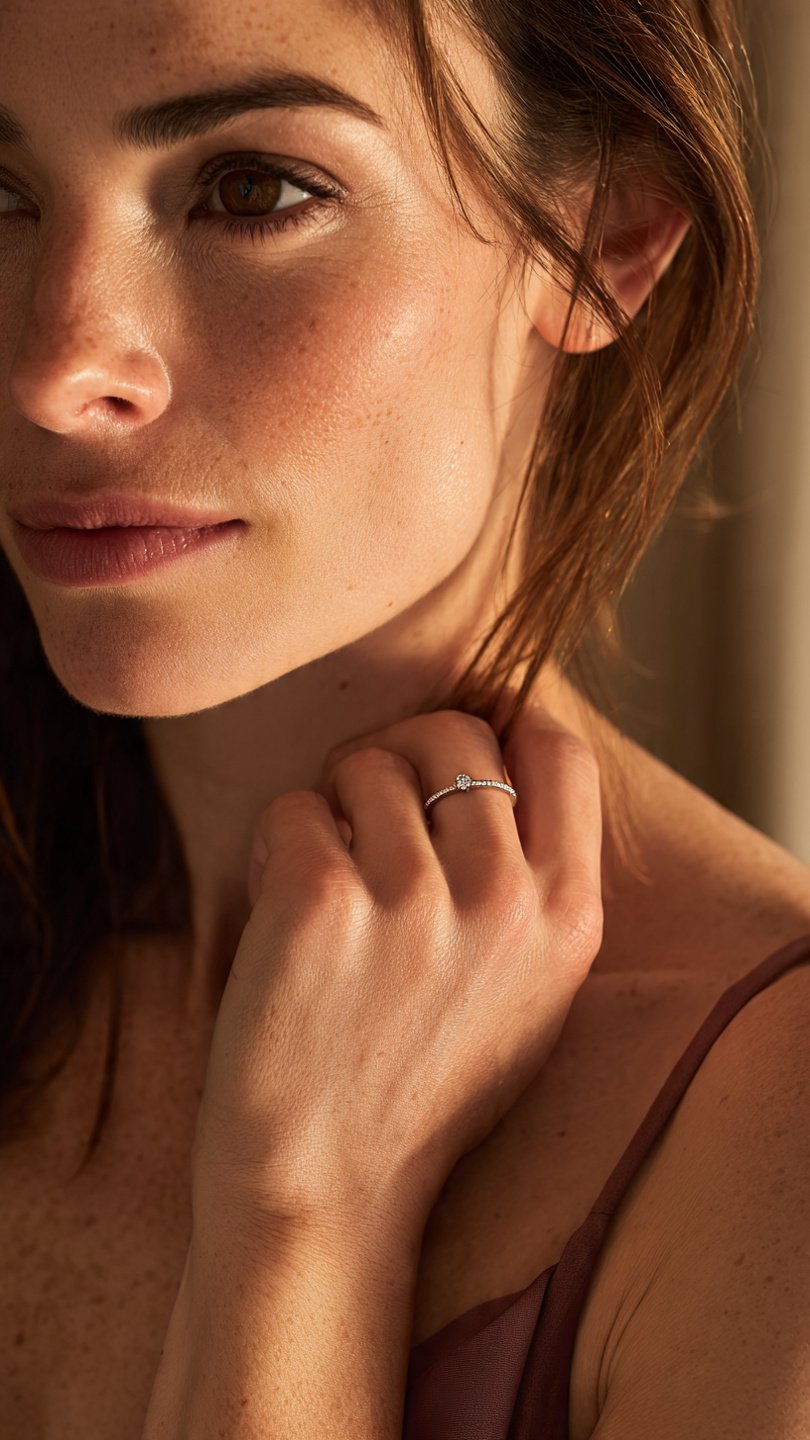
A continuous row of small diamonds, set close enough that very little metal shows between them. The name comes from the French for “paved,” and that is exactly the effect: a band that reads as a line of light rather than metal with stones on it.
- Full or half pavé: stones the whole way round, or only across the visible top of the band.
- Micro-pavé uses noticeably smaller stones for an even denser line of light.
- Quality lives in the metalwork, not just the stones, poorly set pavé loosens with wear.
- More delicate than a plain band, and worth a gentler daily-wear habit as a result.
The technique, and why it matters
Pavé setting is a specific, demanding technique: tiny beads of metal are raised and pushed over the edge of each stone, holding dozens of diamonds in place with barely any visible metal at all. Done well, the band reads as continuous sparkle. Done poorly, the beads holding each stone are too small or too shallow, and stones loosen or fall out within a few years of daily wear, which is exactly why we finish every pavé piece by hand and inspect it stone by stone before it leaves the atelier.
Full pavé, half pavé, micro-pavé
Diamonds set the entire circumference of the band. Sparkle from every angle, worn alone or stacked.
Diamonds set only across the portion visible when worn. Nearly the same visible effect as full pavé, at a meaningfully lower cost and more comfortable against the palm.
The same technique with noticeably smaller stones, set even closer together for an especially fine, dense line of light.
A line of light, not a band with stones on it.
Who chooses pavé, and when
Pavé is the band we see chosen most often by clients who want their wedding ring to carry genuine sparkle of its own, not just sit beside the engagement ring’s. It is also a common choice for a second or replacement band, added specifically because a plain first band felt like it wanted more presence over time.
Styling it well
Because a pavé band already carries its own sparkle, we usually recommend pairing it with a simpler engagement ring, a solitaire or trilogy, so the two pieces share the spotlight rather than compete for it.
Full pavé or half pavé, how to decide
Choose full pavé if the band will be seen and photographed from every angle, worn alone or removed often. Choose half pavé if it will mostly sit against an engagement ring, where the hidden portion is rarely seen anyway, and the savings are real.
Living with a pavé band
This is a genuinely more delicate piece than a plain band, more settings mean more to clean and more to check. We recommend a professional inspection roughly twice a year, more often than a solitaire, since loosened pavé stones are rarely obvious to the eye before they are gone.
No prices online, no obligation, just a conversation about what you're imagining.
Design your band