Pear: One Point, Perfectly Balanced
Why symmetry matters more on a pear than almost any other cut, how the point is protected, and who chooses it.
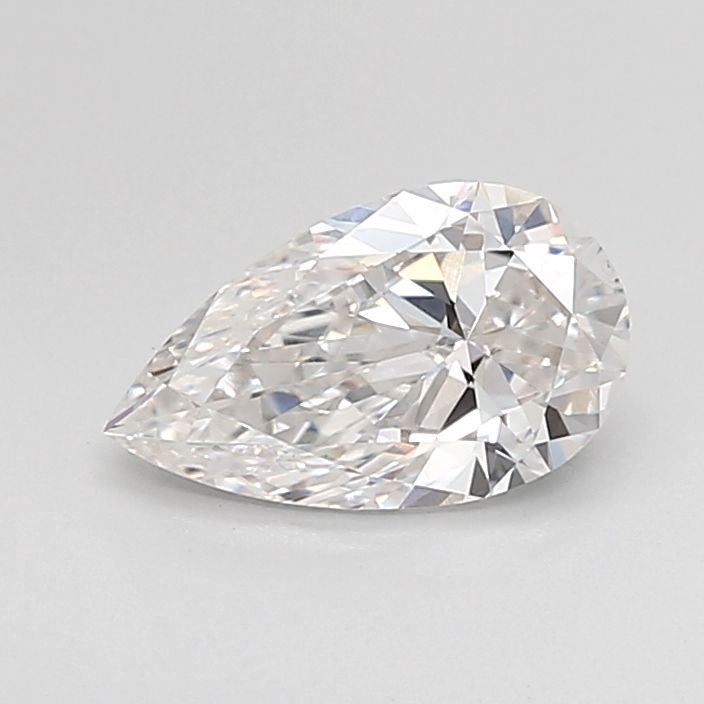
A single-pointed teardrop, combining a round’s brilliance with a marquise’s elongated body. One of the most distinctive silhouettes in the collection, and one that needs a genuinely well-matched symmetry to look right.
- Worn point-up or point-down, a real styling choice, though pointing toward the fingertip is the more traditional convention.
- Symmetry is everything: the two curved sides must mirror each other exactly, or the stone looks visibly lopsided.
- The point is the most fragile part of the stone, and needs a protective prong or reinforced tip in the setting.
- Shares the bow-tie risk of other elongated cuts, worth checking in person.
Why symmetry is the whole game here
A pear cut is judged on its symmetry more strictly than almost any other shape, since the eye immediately notices if one curved shoulder is fuller than the other, or if the point doesn’t sit exactly on the stone’s own center line. A GIA symmetry grade of Excellent or Very Good is worth prioritizing specifically for this shape.
Protecting the point
The pear’s single point is thin, unsupported diamond material, genuinely more vulnerable to chipping than any other part of a fancy-cut stone. We always set a pear with a dedicated V-tip prong or a small reinforcing bezel at that specific point, standard practice across the trade, not an optional upgrade.
A single point, and everything balanced around it.
Who chooses pear, and when
Pear is a common choice for clients who want a shape that reads as deliberately distinctive without the more angular geometry of a marquise, and it is a particularly popular choice for drop-style pendants and earrings beyond rings.
Styling it well
A pear’s asymmetric silhouette benefits from a setting that visually balances it, a subtle halo or a curved band that echoes its rounded end. Point-down orientations are an increasingly common modern variation on the traditional point-up convention.
Pear or marquise
Choose pear for one pointed end and one rounded end, a softer overall read. Choose marquise if you want maximum visual size and two pointed ends instead.
No prices online, no obligation, just a conversation about what you're imagining.
Explore pear diamonds